

Chinese Industrial Inkjet Printer: Innovation and Trends in Digital Printing
2026-05-25
The digital printing landscape is evolving at breakneck speed, and nowhere is this more evident than in China's industrial inkjet sector. From high-speed packaging lines to intricate textile designs, innovation is rewriting the rules of efficiency and customization. At the heart of this transformation lies Danmajet, a brand pushing the boundaries of what inkjet technology can achieve. Yet behind the buzzwords, a quiet revolution is reshaping production floors—one that blends precision engineering with smart, scalable solutions. Curious about the trends that are defining tomorrow's print? Let's dive in.
Beyond Imitation: China’s Original Printhead Designs
For years, China’s printing industry leaned heavily on imported printhead technology, with little room for local innovation. That narrative has shifted as domestic manufacturers moved beyond copying and poured resources into original designs. Teams in Shenzhen and Shanghai now develop printheads that rival global standards, using proprietary nozzle geometries and ink channel architectures that solve long‑standing issues like clogging and banding. These breakthroughs didn’t happen overnight—they grew out of patient experimentation with piezoelectric materials and precision microfabrication.
What sets China’s original printheads apart is how they address specific market needs rather than chasing generic specs. One design, for instance, uses a staggered nozzle array to achieve smoother tonal gradations on ceramic tiles, while another integrates a self‑cleaning mechanism that slashes maintenance downtime in textile printing. Materials science plays a central role, too: new ceramic composites withstand aggressive solvents without degradation, and advanced drive electronics squeeze more performance from every drop of ink. As these printheads find their way into factories across Asia and Europe, the old label of imitation no longer fits.
Chemistry at Play: Inks That Bond with Unusual Surfaces
There’s a quiet thrill in watching ink cling to a surface that should, by all logic, reject it. Glass, plastic, metal — these materials are inherently slick, their surfaces engineered to repel rather than embrace. Yet modern ink chemistry thrives on this very challenge. By tuning the polarity of the ink vehicle and introducing carefully selected adhesion promoters, formulators coax pigments into intimate contact with substrates that were once off-limits. It’s a molecular negotiation, and when it works, the bond feels almost stubborn.
At the heart of this adhesion is a dance between surface energy and interfacial tension. Unusual surfaces often have low surface energy, making wetting difficult. Inks overcome this through clever reformulation — adding resins that mimic the substrate’s chemistry or using solvents that temporarily swell the surface, allowing pigment to anchor itself before the carrier evaporates. In UV-curable inks, for instance, reactive monomers and oligomers crosslink on exposure to light, physically locking the color onto even the most non-porous materials. The result isn’t just a surface stain; it’s a tenacious union forged at the interface.
But the real art comes when functionality meets invention. Think of inks that conduct electricity on flexible films, or those that resist autoclaving on surgical tools. Each application demands a custom chemical cocktail — silane coupling agents for glass, chlorinated polyolefins for untreated polypropylene, or tailored polyurethanes for tricky elastomers. The bond isn’t generic; it’s hyperspecific. It’s chemistry refusing to accept the limits of the surface it’s given, rewriting the rules of what ink can do.
The Algorithm Advantage: Smarter Printing Without the Guesswork
Modern printing often leaves too much to chance—manual settings, inconsistent output, and wasted materials. Algorithms flip that equation, replacing trial-and-error with data-driven precision. They analyze the unique demands of each job, from paper type to ink density, and adjust parameters in real time. This isn't about rigid automation; it's about systems that learn and adapt, delivering consistent quality without constant human oversight.
Behind the scenes, machine learning models predict potential issues before they happen. Instead of reacting to a misprint, the process optimizes itself preemptively—fine-tuning temperature, speed, or alignment. The result is a workflow where decisions are based on patterns, not hunches, making 'smart' printing something you experience rather than configure.
When Packaging Goes Digital: Short Runs, Big Impact
Digital printing has quietly dismantled the old rules of packaging. Where once long runs and costly plates dictated every decision, brands now order a few hundred units without blinking. This shift doesn’t just save money—it lets flavor-of-the-month collaborations, limited-edition spirits, or neighborhood coffee roasters exist on the shelf alongside giants. Suddenly, a microbrewery can wrap its bottles in story-rich art that changes with the season, and a startup can test three label designs in real markets within the same month.
The ripple effects ripple outward. Packaging becomes a live canvas for storytelling, not a static wrapper. Seasonal promos, personalized names on cans, and ultra-regional imagery all thrive in this new world. A small chocolate maker might print each wrapper with a different farmer’s portrait, making the supply chain visible and human. For the consumer, it’s no longer faceless product but a tactile piece of communication—proof that the box in their hand wasn’t churned out for millions, but shaped for a few. The result feels less like packaging and more like a curated artifact.
Perhaps most importantly, short-run digital packaging changes who gets to play. Creativity and agility now outweigh baseline volume. A designer moonlighting at a farmers’ market can outfit a line of honeys with foil-stamped labels that would have been impossible on a small budget just a few years ago. Rather than big fish winning by default, the pond starts filling with unexpected, vivid, short-lived runs that capture the moment exactly. Mass production’s tyranny of sameness cracks open, and suddenly, the little things feel a lot more intentional.
Cleaner Prints: The Shift Toward Sustainable Ink Technologies
For decades, the printing industry relied on petroleum-based inks that packed a heavy environmental punch—volatile organic compounds seeping into the air, toxic pigments leaching into soil, and production processes guzzling energy. The shift toward sustainable ink technologies is rewriting that narrative. Today’s innovators are turning to bio-based marvels: algae-derived pigments that skip the petroleum entirely, soy and vegetable carriers that make de-inking recycled paper easier, and water-based formulations that slash harmful emissions. It’s not just about swapping ingredients; it’s rethinking ink from the molecular level up, aiming for a circular lifecycle where prints leave barely a trace behind.
Yet the allure of cleaner inks isn’t just ecological. Brands are finding that sustainability sells—consumers increasingly scan labels for signs of eco-conscious production, and printers touting low-VOC or cradle-to-cradle certified inks gain a competitive edge. Technical hurdles remain, such as ensuring fast drying times without energy-intensive heat blasts and maintaining vibrant color fidelity on diverse substrates. But breakthroughs are closing the gap: UV-curable inks now cure with low-energy LED lamps, and nanoparticle dispersions allow water-based inks to perform on non-porous surfaces once reserved for solvent-heavy options. The print shop of tomorrow might smell less like a chemistry lab and more like fresh paper, with inks that are as gentle on the planet as they are bold on the page.
Behind the scenes, a quieter revolution is unfolding in supply chains. Ink manufacturers are partnering with agricultural waste processors to use corn stover or rice husk as carbon black alternatives, while others capture carbon dioxide to create pigment precursors. Even the packaging inks come in is getting a makeover: refillable cartridges and bulk systems cut single-use plastic. What started as a niche movement is becoming the new standard, driven by tightening regulations and a growing recognition that the true cost of ink includes its footprint from cradle to grave. It’s a fresh page for an age-old craft, promising that the words and images we print don’t come at the planet’s expense.
Connected Production: Inkjet Meets the Automated Assembly Line
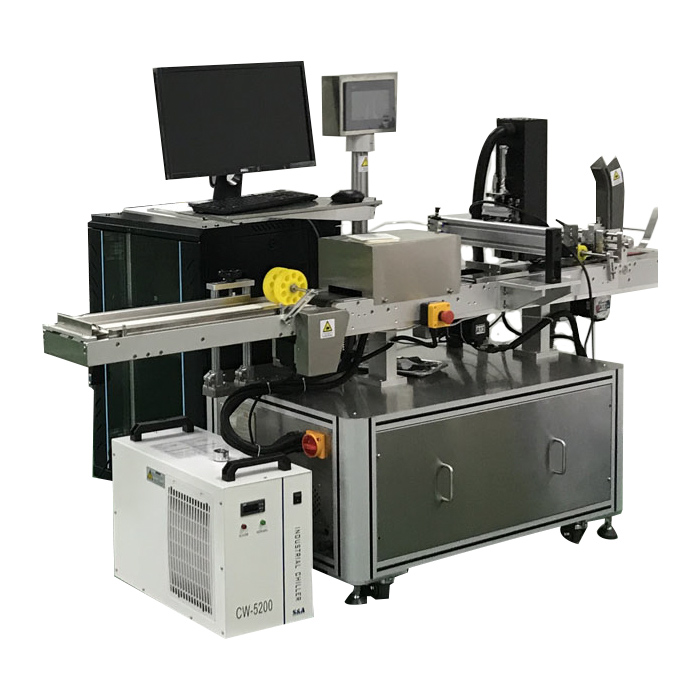
Inkjet printing is no longer just a standalone process—it has become a fluid part of the automated assembly line. By embedding coders directly into conveyors and robotic cells, manufacturers achieve real-time, non-contact marking without breaking the rhythm of production. Codes, dates, and serialized data land precisely on moving products, guided by sensors and PLC logic that synchronize printheads with line speed and position.
This tight integration eliminates the need for manual transfer or separate labeling stations, slashing cycle times and reducing handling errors. Smart cartridges self-monitor ink levels and viscosity, alerting operators before a dry-out can cause downtime. Meanwhile, vision systems downstream instantly verify every mark, re-triggering the printer on the fly if a code is missing or flawed, ensuring zero-defect output.
The result is a seamless data pipeline from ERP to product surface, where each item carries a unique digital identity. This connectivity paves the way for track-and-trace, brand protection, and late-stage customization—all while the assembly line never pauses. Inkjet has evolved from a post-production afterthought into a core enabler of connected manufacturing.
FAQ
Chinese manufacturers have focused on developing high-precision printheads with variable droplet technology, enabling sharper image quality. They are also integrating artificial intelligence for real-time print defect detection, reducing waste. Advances in UV-curable and eco-solvent inks now offer better adhesion on diverse substrates, expanding application possibilities.
Digital inkjet printing has revolutionized packaging by allowing short-run customization with quick turnaround, eliminating the need for plates. In textiles, it enables on-demand fabric printing with reduced water consumption. The ceramics industry now adopts inkjet for intricate designs directly onto tiles, boosting design flexibility and production efficiency.
There is a clear shift towards higher automation and smart factories, with printers integrated into IoT ecosystems for predictive maintenance. Sustainability is also a major trend, with water-based and biodegradable inks gaining traction. Miniaturization of print systems for hybrid manufacturing lines and the rise of direct-to-object printing for promotional goods are emerging.
Chinese models typically offer a 20-30% cost advantage without significant sacrifice in speed or resolution. Recent advancements in piezo printhead manufacturing have narrowed the reliability gap. Domestic brands now provide competitive service networks and localized support, making them attractive to mid-range and high-volume production environments.
Policies such as the 'Made in China 2025' initiative prioritize smart manufacturing and have spurred investment in digital printing R&D. Tax incentives for eco-friendly technologies encourage adoption of solvent-free inks. Additionally, subsidies for upgrading traditional factories to digital processes have expanded the market for industrial inkjet systems.
The packaging and labeling sector is the largest adopter due to demand for personalized packaging. Textile printing follows, especially with the shift to online fashion retail. Electronics manufacturing uses inkjet for printed circuit boards and flexible displays, while automotive interiors leverage inkjet for customized surface finishes.
Nanotechnology-enhanced inks deliver faster drying times and better UV resistance, critical for outdoor applications. Conductive inks enable printing of RFID antennas and sensors directly onto products. Bio-based inks derived from soy or algae are emerging as a sustainable alternative, reducing volatile organic compound emissions without compromising print quality.
Key challenges include reducing dependency on imported printhead components, such as from Japanese or European suppliers. Narrow material compatibility for certain specialty inks remains an issue for some domestic printers. Additionally, companies must continuously upskill the workforce to operate and maintain increasingly complex digital production lines.
Conclusion
China's industrial inkjet sector has evolved from replicating Western designs to pioneering original technologies that redefine digital printing. A standout shift is the development of proprietary printhead designs, moving beyond mere imitation to create components optimized for high-speed, high-resolution output in manufacturing settings. Coupled with advances in ink chemistry, these printers now bond reliably with unconventional surfaces—ranging from flexible films to textured ceramics—expanding the range of printable goods. Software also plays a critical role; embedded algorithms automatically adjust droplet size, trajectory, and curing parameters in real time, eliminating trial-and-error and reducing material waste. This intelligent control not only ensures consistent quality but also enables seamless integration with smart factory systems, where printers communicate with other machines to synchronize production flows.
These technological leaps are transforming packaging and manufacturing. Digital short-run printing allows brands to produce limited-edition packaging with high visual impact in record time, slashing setup costs and inventory. The move toward cleaner production is equally pronounced: water-based and UV-curable inks with bio-derived components are replacing solvent-heavy formulas, lowering VOC emissions and aiding recyclability. Moreover, inkjet systems are now embedded directly into automated assembly lines, printing variable data, barcodes, or decorative patterns on products as they move—no longer a separate post-production step. This convergence of digital printing with Industry 4.0 logistics exemplifies how Chinese manufacturers are building efficient, sustainable, and highly adaptive printing ecosystems that serve global markets.
Contact Us
Contact Person: Jacky
Email: [email protected]
Tel/WhatsApp: 086 15000607053
Website: https://www.danmajet.com