

Leading Piezo Inkjet Printer Supplier Offers Advanced Industrial Printing Solutions
2026-05-20
In the fast-paced world of industrial printing, precision and reliability aren't just nice-to-haves—they're mandatory. But what if you could push those limits even further? Enter Danmajet, a leading piezo inkjet printer supplier that's redefining what's possible with advanced solutions engineered for the toughest jobs. From high-speed coding to intricate product decoration, their technology doesn't just keep up; it sets the pace. Curious how Danmajet is transforming production lines around the globe? Let's dive into the innovations that make their printers the go-to choice for industries that refuse to compromise.
Unmatched piezo precision for demanding industrial tasks
When a process demands motion control at the sub-nanometer level, piezo actuators step in where conventional mechanics simply give up. They respond to voltage changes almost instantaneously, translating electrical commands into physical displacement without gears, backlash, or friction. This direct solid-state action isn't just about resolution; it’s about repeatability that stays consistent cycle after cycle, even in vacuum or extreme temperatures. For tasks like optical alignment or semiconductor lithography, that kind of unwavering accuracy becomes the foundation of product quality, not just a specification on a datasheet.
In high-throughput manufacturing, speed often fights against precision, but piezo systems rewrite that equation. Their stiffness allows rapid acceleration and settling, turning what used to be a trade-off into a dual advantage. Imagine a laser micro-machining station where the focal point adjusts in microseconds to follow surface contours, or an active vibration cancellation loop that neutralizes mechanical noise before it ever reaches the sensitive part. These are not theoretical ideals—they are daily realities in factories where sub-micron defects are simply not tolerated.
What really sets piezo technology apart in demanding environments, however, is its intrinsic reliability. With no lubricants, no rotating elements, and a design that doesn't degrade with millions of cycles, maintenance becomes an afterthought. Coupled with sensor feedback that compensates for any nonlinearities, modern piezo stages deliver long-term stability that mechanical systems can only envy. It’s a quiet, wear-free precision that keeps critical industrial tasks running smoothly, whether aligning fiber optics or dosing adhesive in medical device assembly.
Versatile integration across electronics, packaging, and beyond
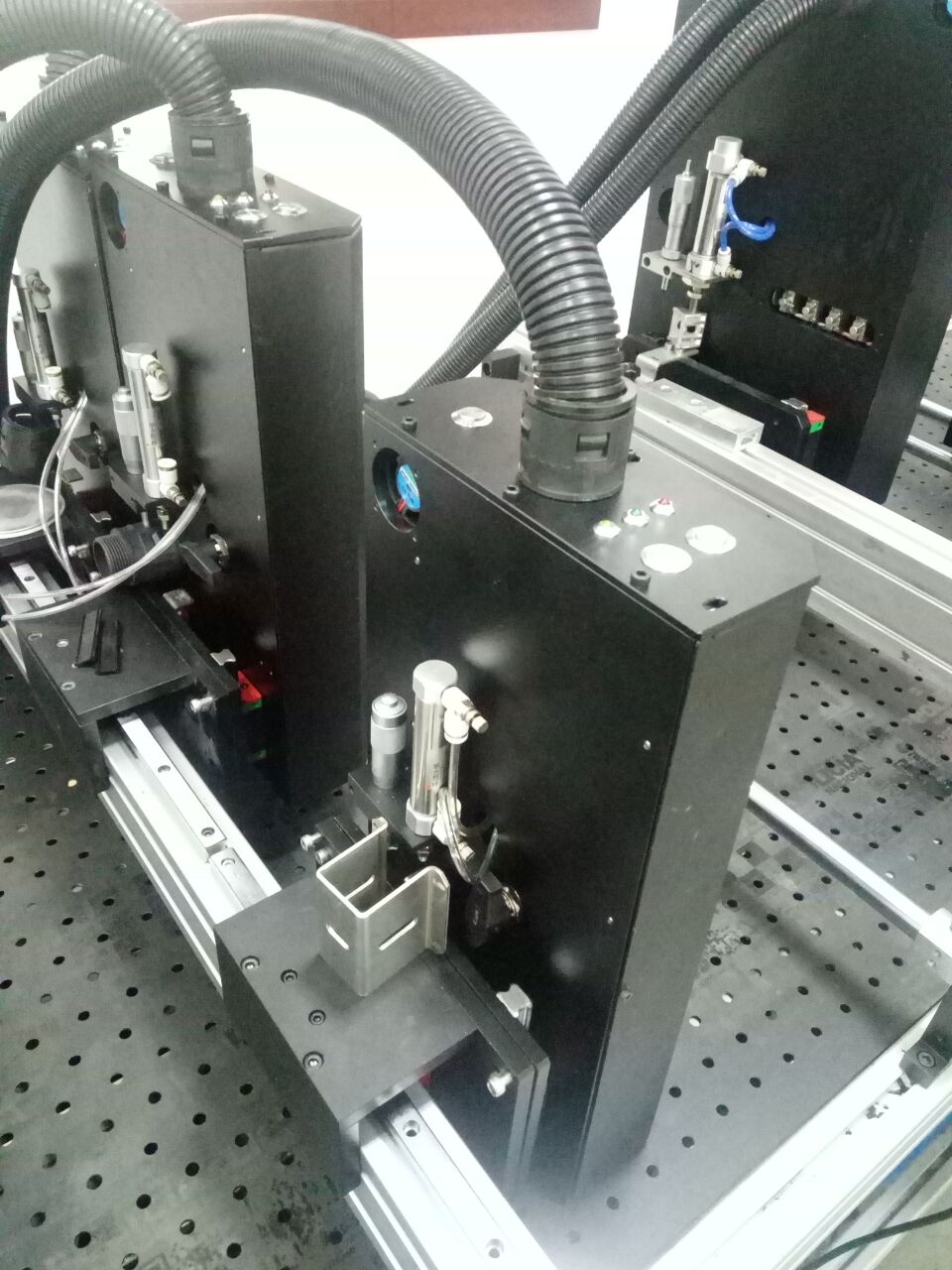
Modern electronic systems demand seamless interoperability between rigid circuit boards, flexible interconnects, and unconventional substrates. This integration extends beyond traditional PCB boundaries, embedding conductive traces directly into molded plastic housings or structural composites. The challenge lies in maintaining signal integrity while bridging the mechanical gap between silicon and everyday materials.
Advanced packaging techniques now blur the line between the die and its operating environment. Fan-out wafer-level packaging, for instance, redistributes I/O pads across a larger area, enabling direct attachment to flexible foils or 3D-shaped carriers without intermediate connectors. Such approaches reduce parasitic losses and unlock new form factors where the electronics conform to—rather than dictate—the product silhouette.
Looking beyond conventional domains, this fusion reaches into biomedical textiles, smart packaging with embedded NFC tags, and even building-integrated photovoltaics where the module itself carries power management circuitry. Each application rewrites the rules of durability, conductivity, and cost, demanding tailored material stacks that marry printed electronics with high-performance silicon in a single, unobtrusive layer.
Engineered for nonstop, high-volume production workflows
Built from the ground up to handle the kind of relentless demand that breaks ordinary equipment, this system thrives under 24/7 operation. It shrugs off heat, vibration, and the endless cycle of start-stop motion that comes with producing millions of identical parts. The frame alone tells the story: a single cast-iron bed that’s been stress-relieved and hand-scraped, absorbing forces that would twist lighter machines out of alignment within weeks.
Everything about the toolchain is designed for rapid cycling and minimal intervention. Automatic pallet changers flip workpieces in under three seconds, while the chip conveyor runs continuously, clearing debris before it has a chance to clog sensors or scratch finished surfaces. Bar feeders, part unloaders, and mist collectors all communicate through a proprietary protocol that prioritizes uptime—if one small component hesitates, the controller adjusts feed rates on the fly rather than triggering a full line stop.
We’ve also paid close attention to the consumables that typically slow high-output lines. The coolant system filters down to 5 microns and uses a self-cleaning centrifugal separator, so you’re not constantly pulling tanks for scrubbing. Tool holders feature a double-contact interface that maintains rigidity at spindle speeds that would cause chatter in conventional setups. Maintenance alerts actually mean something here: the spindle vibration analysis gives you weeks of warning before a bearing shows pitting, letting you schedule downtime around production, not the other way around.
Custom printhead configurations that fit your exact line
Every production line has its own quirks and demands, and off-the-shelf printheads rarely deliver the seamless performance you need. We take a different route—working directly with your specifications to adjust nozzle density, drop size, and ink chemistry so your setup feels less like an add-on and more like a natural part of your process.
Whether you’re dealing with curved surfaces, unusual substrates, or high-speed wrapping, the configuration can be tuned to match. Think wider print swaths, staggered nozzle rows, or specialized coatings that keep downtime to a whisper. No more compromising on image sharpness just because your line runs a little differently.
Consistent, durable prints on virtually any substrate
Achieving reliable print quality across diverse materials doesn’t have to be a challenge. Our advanced ink formulation bonds aggressively with surfaces ranging from glossy plastics to uncoated metals, ensuring that every mark stays sharp and vibrant. Whether you’re coding on automotive parts or branding promotional items, the result is a crisp, smear-resistant finish that holds up to handling, moisture, and everyday wear.
Durability is built into every drop. Unlike conventional inks that fade or flake under stress, ours cures to a flexible, abrasion-resistant layer that flexes with the substrate instead of cracking. This means your prints remain legible and professional-looking even after repeated cleaning cycles, outdoor exposure, or rough transport—ideal for industrial labeling, safety markings, and packaging that works as hard as you do.
From porous cardboard to slick polymer films, the secret lies in precise surface energy matching during the printing process. We’ve engineered the system to eliminate the need for primers or pre-treatments, saving time and reducing waste. The outcome is a tenacious bond that feels like it’s part of the material itself, maintaining color fastness and edge definition over months of use without peeling or ghosting.
Hands-on support from installation to ongoing optimization
We don’t just hand over the keys and wish you luck. From the very first login, our team is right there with you—setting things up, tweaking settings, and making sure everything fits your workflow like a glove. It’s support that actually feels like a conversation, not a ticket queue.
Installation might be a one-time event, but we treat it like the start of a partnership. We stick around, checking in, fine-tuning, and adapting as your needs change. Think of us as an extension of your team—always ready to drop in and help you squeeze every bit of performance out of the setup.
And because 'set it and forget it' rarely works in the real world, we’re constantly monitoring and suggesting improvements. No canned checklists, no generic advice—just practical, hands-on tweaks that keep things running smoothly long after the initial install.
FAQ
Unlike thermal inkjet, piezo printheads use electrically charged crystals that precisely control ink droplet size and placement, enabling consistent output on various substrates.
They're widely used in packaging, textiles, ceramics, electronics, and automotive, where high-resolution, durable marking is essential.
Our systems are engineered with robust printheads and smart ink management to minimize downtime, backed by predictive maintenance alerts.
Absolutely. They integrate seamlessly with databases to print unique codes, serial numbers, or personalized designs at full speed.
We support UV-curable, solvent, water-based, and specialty inks, enabling adhesion to plastics, metals, glass, and more.
Yes, our engineering team works closely with clients to tailor print width, resolution, and integration into existing workflows.
Thanks to piezo technology's low heat generation and smart power management, our models consume up to 30% less energy.
We provide remote diagnostics, on-site training, and a global network of service engineers for rapid issue resolution.
Conclusion
Piezo inkjet technology has reached a point where precision and durability no longer force compromises on the factory floor—our printheads deliver controlled, repeatable jetting for tasks as diverse as PCB patterning, direct‑to‑shape bottle decoration, and high‑speed carton coding. The same piezo actuator that places a 20‑picoliter dot on a silicon wafer also handles aggressive UV inks in a packaging line without drift or nozzle dropout, thanks to real‑time waveform tuning and inert fluid paths. Integration is treated as a first‑class engineering step rather than an afterthought; standard interfaces and compact drive electronics let you nest print bars directly into converting equipment, robotic cells, or narrow‑web presses, often eliminating a standalone printing station. For lines that never slow down, recirculating printhead designs and onboard diagnostics keep the system running through shift after shift, making the workflow genuinely nonstop rather than theoretically so.
What matters even more is how the technology fits your production, not the other way around. We configure nozzle density, throw distance, and array width to the millimeter of your product path—whether that means a single‑pass 2‑meter textile printer or eight interleaved heads squeezing between guides on a filling machine. The same mount accepts build plates for rigid media and roller platens for flexible films, and print durability holds on glass, powder‑coated metal, and recycled plastics because the ink‑substrate interaction is engineered from pre‑treatment through curing. From the first site survey to firmware tweaks two years in, a dedicated engineer knows your line’s quirks and keeps optimization proactive. That combination of physical configurability and applied know‑how turns an advanced printing solution into a predictable industrial asset.
Contact Us
Contact Person: Jacky
Email: [email protected]
Tel/WhatsApp: 086 15000607053
Website: https://www.danmajet.com