

Are You Choosing the Right Ticket Label for Real-World Scanning, Handling, and Speed?
2025-12-23
I used to think a ticket is “just a ticket” until I watched an entire check-in line stall because labels smudged, barcodes wouldn’t scan, and adhesive failed the moment it hit a cold surface. That’s exactly why I started paying attention to the details behind a Ticket Label. When I work with customers through Smart Printing, I focus less on buzzwords and more on what actually happens after printing: friction, humidity, temperature swings, fast-peel application, and the brutal reality of high-speed scanning.
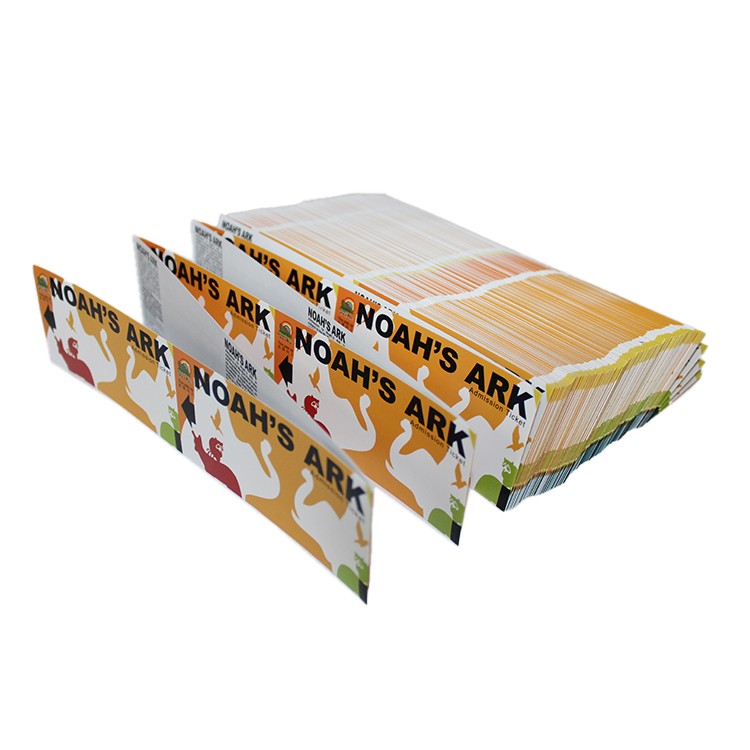
Do ticketing failures really come from the label rather than the printer?
A lot of teams blame printers first, and sometimes that’s fair. But in my experience, recurring issues often trace back to label choices that don’t fit the workflow. If the substrate can’t hold crisp edges, if the coating can’t resist scuffs, or if the adhesive isn’t designed for your surface, the “printing problem” keeps coming back no matter how many settings you tweak.
- Smudging often comes from a mismatch between print method and coating, not “bad ink.”
- Unreadable barcodes usually happen when contrast, edge definition, or quiet zones degrade during handling.
- Peeling or curling is frequently an adhesive and liner issue, especially with curved items or cold-chain conditions.
- Paper tearing can be a material-strength problem if tickets get yanked, folded, or pocketed repeatedly.
So yes, hardware matters, but the label is the part that actually travels through the world. A Ticket Label should be chosen like a component in your system, not a commodity.
What makes a Ticket Label scan reliably every time?
Reliable scanning isn’t magic. It’s repeatable print quality plus surface stability. If you’re printing barcodes, QR codes, or sequential numbers, what you want is consistency across every roll and across every shift.
- High contrast between bars and background to survive distance, speed, and varying scanners.
- Sharp edges so scanners can read without hesitation, even when users apply labels quickly.
- Smear resistance so codes don’t degrade when touched, rubbed, or exposed to moisture.
- Dimensional stability so labels don’t shrink, curl, or warp and distort the printed image.
When I evaluate a Ticket Label, I think about the entire lifecycle: print → apply → handle → scan → store. If any one step introduces abrasion, oils, condensation, or friction, the label needs the right face stock and coating to keep the data intact.
Which materials and adhesives match your environment best?
If you tell me where the ticket goes and what it touches, I can usually narrow options quickly. Different venues and industries stress labels in different ways: wristbands get sweat and friction, event tickets get folding and pockets, logistics tickets get cold storage and rough surfaces.
| Common Use Case | Recommended Face Stock | Adhesive Direction | Why It Works in Practice |
|---|---|---|---|
| Event entry tickets with barcode scanning | Coated paper or synthetic with protective top layer | General-purpose permanent | Maintains contrast and edge definition under light handling |
| Wristband-style ticketing and access control | Synthetic film with abrasion resistance | Skin-safe or specialty adhesive as required | Better durability against sweat, friction, and movement |
| Cold storage or refrigerated logistics tickets | Synthetic film or cold-resistant coated stock | Cold-temp adhesive | Reduces edge lift and failure when applied to chilled surfaces |
| High-speed production line ticket labeling | Stable coated stock with consistent thickness | Machine-optimized permanent | Feeds cleanly, peels smoothly, and supports fast application |
| Short-term promotions and fast turnover tickets | Economy coated paper | Removable or light permanent | Controls cost while meeting basic scan requirements |
Adhesive is the part most people underestimate. I’ve seen teams choose a great face stock, then lose all the benefits because the adhesive wasn’t designed for their surface (powder-coated metal, textured plastics, curved containers, or humid environments). A good Ticket Label is a pairing: face stock + adhesive + liner that behaves predictably in your workflow.
How do I balance durability and cost without guessing?
I don’t recommend paying for durability you’ll never use, but I also hate watching customers burn money on reprints, rescans, and staff time. The trick is to match durability to the “damage profile” of your ticket.
- Light handling means coated paper can be enough if scan reliability stays high.
- Frequent touch points often justify a more scuff-resistant top layer.
- Moisture and temperature usually push you toward synthetic options or specialized coatings.
- Security requirements may call for tamper-evident construction or destructible materials.
Here’s the practical way I think about ROI: if a higher-grade Ticket Label reduces reprints, eliminates manual overrides, and speeds up entry flow, it often pays for itself within a few events or shipments. The cheapest label is rarely the lowest-cost option once downtime shows up.
What specifications should I confirm before ordering?
If you want consistent results, I suggest confirming these details before production. It prevents the back-and-forth that slows projects down and causes mismatched rolls.
- Label size and core so rolls fit your printer and dispensers correctly.
- Print method so the face stock and coating match thermal, inkjet, or other processes.
- Roll direction and winding so the label orientation aligns with your application workflow.
- Adhesive type based on surface energy, texture, and temperature at application.
- Expected lifespan so durability targets are realistic for your handling conditions.
- Data complexity including barcodes, QR codes, variable text, and numbering sequences.
When customers bring me these basics, I can guide them to a Ticket Label setup that prints cleanly, applies smoothly, and scans reliably without a bunch of trial-and-error.
How can I reduce reprints, downtime, and customer complaints quickly?
If you’re fighting complaints like “it won’t scan” or “it fell off,” you don’t need a dramatic overhaul. You need targeted fixes. Here are the adjustments that typically make the fastest impact.
- Upgrade the top surface if abrasion is the problem, because scuffs destroy barcode edges first.
- Switch adhesive if peeling or curling shows up, especially in cold, humid, or textured surfaces.
- Standardize roll consistency if printer feeding is unstable, because thickness variation causes print artifacts.
- Validate barcode size and quiet zones if you’re scanning at speed or from distance.
- Run handling tests that mimic reality: pocket friction, sweat, condensation, and fast-peel application.
I’m picky about this because a broken ticketing flow makes your brand look disorganized even when the real culprit is a small materials mismatch. A well-chosen Ticket Label should feel boring in the best way: it simply works, every time, under pressure.
Ready to fix your ticketing workflow for good?
If you’re done gambling on labels that only work “in perfect conditions,” I can help you spec a Ticket Label that matches your real environment and your real scanning speed. Tell me how your tickets are used, what surfaces they go on, and what failures you’re seeing, and I’ll point you toward options that reduce reprints and keep lines moving. If you want fast, practical recommendations and stable production quality from Smart Printing, contact us and share your requirements so we can get you a solution that holds up in the field.