

Can an Automatic Flat-bed Die Cutting Machine Handle Both Kiss-Cutting and Through-Cutting on the Same Run
2026-08-12
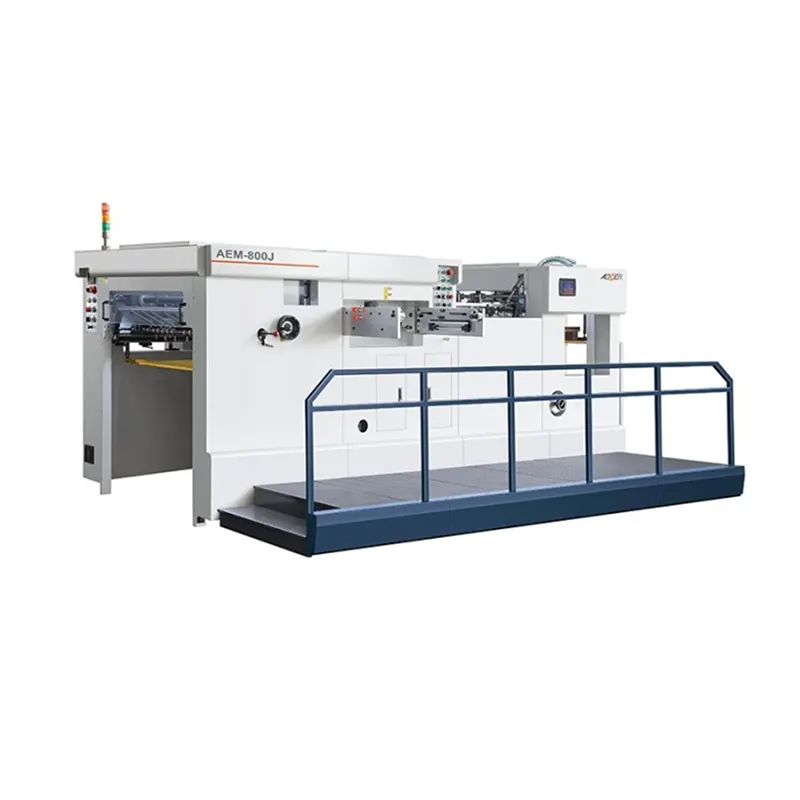
For packaging converters and label printers, the question often arises when evaluating new equipment: is it truly possible to perform two fundamentally different cutting actions—kiss-cutting and through-cutting—in a single pass on the same Automatic Flat-bed Die Cutting Machine? The short answer is yes, but the execution depends heavily on tooling design, machine configuration, and material characteristics. At NEW STAR, we have engineered our flat-bed die cutting systems to support this hybrid capability, yet many operators remain uncertain about the practical limits and setup requirements. This post dissects the mechanics, compares the two cutting modes, and delivers actionable guidance for production managers seeking to reduce setup times and material waste.
Understanding the Two Cutting Actions
Before examining the "same run" feasibility, it is essential to define each process clearly.
| Cutting Type | Definition | Typical Application | Die Penetration Depth |
|---|---|---|---|
| Kiss-Cutting | Cuts through the top layer of a multi-layered material (e.g., label stock) without penetrating the release liner. | Self-adhesive labels, gaskets, medical tapes. | Partial – stops at the liner. |
| Through-Cutting | Cuts completely through all material layers, including the liner, separating finished parts. | Folding cartons, corrugated inserts, paperboard blanks. | Full – penetrates the cutting plate. |
The technical challenge lies in the fact that kiss-cutting requires micron-level pressure accuracy, while through-cutting demands significantly higher force and a hardened anvil surface. An Automatic Flat-bed Die Cutting Machine designed for both must feature adjustable platen pressure, programmable dwell time, and quick-change tooling accommodation.
Can They Run on the Same Run?
Yes, but under specific conditions. A single Automatic Flat-bed Die Cutting Machine can process a mixed layout—where some die rules are height-adjusted for kiss-cut and others for through-cut—within the same sheet. This is achieved using a combination die with two rule heights: lower rules (typically 0.3–0.5 mm shorter) for kiss-cutting the face stock, and full-height rules for through-cutting the entire web. The machine’s controller must also support zone-based pressure compensation to avoid over-cutting the liner in kiss areas or under-cutting in through areas.
NEW STAR recommends the following workflow for mixed-run success:
-
Use a steel rule die with precision-ground rule heights.
-
Set the total cutting pressure to the through-cut requirement.
-
Activate the machine’s micro-adjustment system to reduce local pressure over kiss-cut zones.
-
Run a sample sheet and measure liner integrity with a thickness gauge.
Critical Factors That Determine Success
| Factor | Kiss-Cutting Requirement | Through-Cutting Requirement | Impact on Same-Run |
|---|---|---|---|
| Die Rule Height | Lower by 0.2–0.4 mm | Full height | Must be custom-ground together. |
| Counterplate Material | Soft (e.g., PVC or Teflon) | Hard (steel or phenolic) | Compromise using dual-durometer plates. |
| Feed Accuracy | ±0.1 mm | ±0.2 mm | Tighter registration needed. |
| Stripping System | Low-force pins | High-force ejectors | Adjustable spring-loaded strippers. |
| Machine Rigidity | Moderate | High | NEW STAR models feature heavy cast-iron frames to handle both extremes. |
Common Mistakes to Avoid
-
Assuming the same cutting pressure works for both actions – this is false and leads to liner tears or incomplete cuts.
-
Using standard ejection rubber across both zones – differential hardness is mandatory.
-
Neglecting to clean the cutting plate between job changes – residual adhesive from kiss-cut liners can elevate through-cut pressure.
Frequently Asked Questions About Automatic Flat-bed Die Cutting Machine
FAQ 1: What is the maximum material thickness an Automatic Flat-bed Die Cutting Machine can handle for mixed kiss-and-through cutting?
Answer:
For a standard Automatic Flat-bed Die Cutting Machine, the maximum total material thickness for mixed cutting is typically 5 mm (0.2 inches) when combining kiss and through actions. However, the critical limit is not the total thickness but the thickness ratio between the top layer (to be kiss-cut) and the liner/base (to be through-cut). A ratio of 1:3 (e.g., 0.5 mm face stock on a 1.5 mm liner) is considered safe. Beyond this, the pressure differential between zones exceeds the machine’s local compensation range, risking either incomplete through-cuts or liner perforation. NEW STAR offers an optional dual-pressure platen that extends this ratio to 1:5, enabling thicker corrugated faces with thin release liners.
FAQ 2: How does an Automatic Flat-bed Die Cutting Machine maintain registration accuracy when kiss-cut and through-cut patterns are nested on the same sheet?
Answer:
Registration accuracy in a mixed-run scenario depends on three synchronized systems: the optical registration sensor, the pull-roll servo motor, and the platen parallelism adjustment. A high-end Automatic Flat-bed Die Cutting Machine like those from NEW STAR uses a CCD camera to read print marks on each sheet before the cut. If the machine detects a skew, it independently adjusts the left and right pull-roll speeds within 0.05-second response time. For nested patterns—where a kiss-cut label sits inside a through-cut carton blank—the machine also employs dynamic dwell compensation: the platen holds pressure 20–30 ms longer over kiss zones to allow the shallower rules to shear cleanly without shifting the substrate. This ensures that both cut types remain within ±0.15 mm of the printed artwork, even at speeds up to 7,500 sheets per hour.
FAQ 3: What maintenance schedule is recommended for an Automatic Flat-bed Die Cutting Machine that frequently runs mixed kiss-and-through jobs?
Answer:
Frequent switching between kiss and through cutting imposes asymmetric wear on the platen surface, cutting plate, and die rule edges. NEW STAR advises a three-tier maintenance schedule for an Automatic Flat-bed Die Cutting Machine in mixed-use environments:
-
Daily (after each shift): Clean the cutting plate with a non-abrasive solvent to remove adhesive residues; inspect the lower platen for micro-scratches using a straight-edge gauge.
-
Weekly: Measure the parallelism of the upper and lower platens with dial indicators. A deviation exceeding 0.03 mm over 1,000 mm width requires shim adjustment.
-
Monthly: Replace the cutting plate (if scored deeper than 0.1 mm) and rotate the die rule positions if the die is reusable. Additionally, lubricate the toggle-link bearings with high-temperature grease, as mixed jobs increase peak torque by 15–20%. Following this schedule extends the machine’s service life to over 12 million impressions, based on NEW STAR field data from Southeast Asian converters.
Final Recommendation
The ability to combine kiss-cutting and through-cutting on one Automatic Flat-bed Die Cutting Machine is not a marketing gimmick—it is a proven capability when the machine offers programmable pressure zones, rigid construction, and intelligent registration. NEW STAR has delivered over 200 hybrid-capable units to label houses and carton plants worldwide, with documented setup time reductions of 40% compared to two-machine workflows.
Ready to Test Your Material Mix?
Every substrate behaves differently under combination dies. Contact NEW STAR today to schedule a free material test at our technical center. Our engineers will run your actual stock on an Automatic Flat-bed Die Cutting Machine and provide a detailed pressure-profile report within 48 hours. Email us or fill out the consultation form on our website—we will respond with a customized cutting solution within one business day. Your productivity gains start with one conversation.