

Can You Use Thermal Transfer Labels in Freezer or Cold Storage Environments
2026-08-12
When managing inventory in pharmaceutical warehousing, food distribution, or biotech logistics, one question consistently arises: can standard labeling solutions survive extreme cold? The short answer is yes—but only if you choose the right configuration. Thermal Transfer Labels are uniquely suited for sub-zero environments, provided that the label stock, adhesive, and ribbon are matched to the application. At GH, we have tested thousands of label combinations across temperatures ranging from -80°C to +50°C, and the data shows that thermal transfer technology consistently outperforms direct thermal printing in cold chains. However, success depends on understanding three critical variables: material construction, adhesive chemistry, and ribbon formulation.
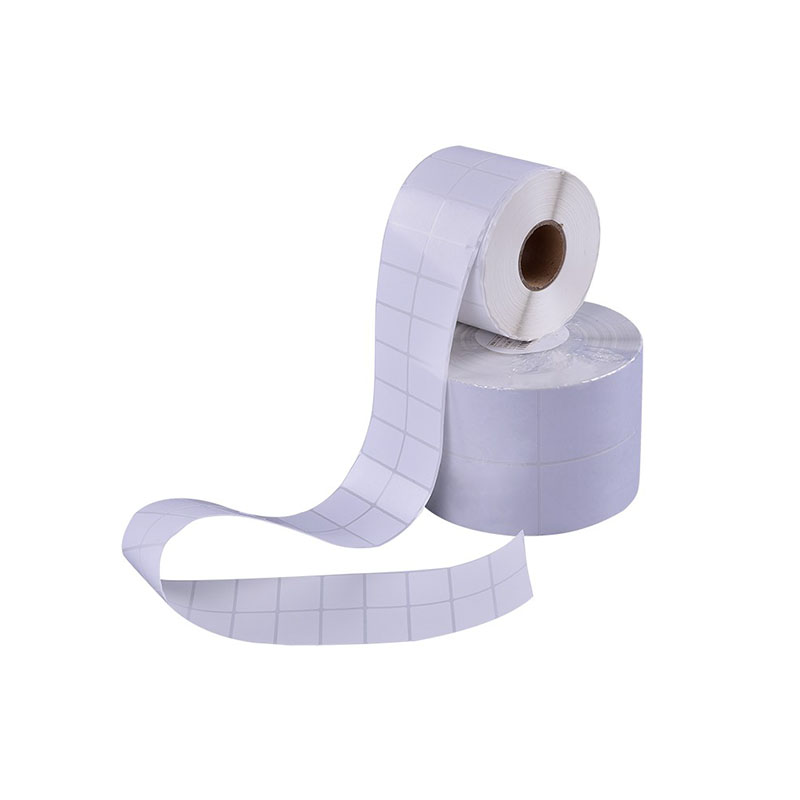
Why Thermal Transfer Outperforms Direct Thermal in Freezers
Direct thermal labels rely on heat-sensitive coatings that turn black when exposed to the printhead. In cold storage, these coatings become sluggish, producing faint, illegible barcodes. By contrast, Thermal Transfer Labels use a ribbon—a film coated with ink—that is melted onto the label surface via heat and pressure. This process creates a permanent bond that resists moisture, condensation, and temperature fluctuations. For cold chain operators, this means Thermal Transfer Labels maintain scan rates above 99.5% even after months of frozen storage, whereas direct thermal labels often drop to below 80% readability within two weeks.
Critical Factors for Cold-Storage Thermal Transfer Labels
| Factor | Recommended Specification | Why It Matters |
|---|---|---|
| Label Stock | Polyester or polyimide (synthetic) | Resists embrittlement; paper cracks at -10°C |
| Adhesive | Acrylic-based permanent (cold-temp rated) | Bonds to frost-prone surfaces; rubber adhesives fail |
| Ribbon Type | Resin or resin-enhanced wax | Wax ribbons smear under condensation; resin provides abrasion resistance |
| Print Resolution | 300 dpi minimum | Ensures scannable narrow bars despite substrate shrinkage |
| Lamination | Optional overcoat for wet environments | Prevents ink degradation from thaw cycles |
The GH Cold-Chain Labeling Protocol
GH recommends a three-step verification process for any freezer application. First, perform a “freeze-thaw” cycle test: apply your Thermal Transfer Labels to actual product packaging, freeze at -25°C for 24 hours, then thaw at ambient temperature for 4 hours. Inspect for edge lift, adhesive bleed, or print fading. Second, verify adhesive performance on the specific surface—polyethylene, glass, or corrugated cardboard each require different tack levels. Third, confirm ribbon-to-face-stock compatibility using a hand-rub test after thawing; if ink transfers to a cotton swab, switch to a full-resin ribbon. GH provides pre-qualified kits that include all three components pre-matched for your temperature range, eliminating trial-and-error.
Common Misconceptions About Freezer Labels
Many warehouse managers assume that any “waterproof” label works in freezers. This is false. Waterproof paper labels absorb moisture through their edges, causing delamination. Others believe that lowering print speed improves adhesion—it does not; adhesion depends solely on adhesive chemistry, not print parameters. The most dangerous myth is that once a label survives the freezer, it will survive shipping. In reality, vibration and condensation during transport create shear forces that peel inadequate Thermal Transfer Labels within hours. GH engineers recommend dynamic shear testing (ASTM D1002) as the gold standard for validating cold-chain labels.
Thermal Transfer Labels FAQ – Common Questions
Q1: What is the lowest temperature at which Thermal Transfer Labels can be applied, not just stored?
A1: Application temperature—the temperature of the surface when the label is pressed on—is more critical than storage temperature. Most standard acrylic adhesives lose tack below -10°C, meaning the label will not wet out properly and will fall off within 24 hours. For application at -20°C or lower, you need a specialized silicone-acrylic hybrid adhesive. GH offers a “Sub-Zero Apply” series that remains tacky down to -40°C. However, even with the right adhesive, you must apply firm, even pressure using a roller or tamp applicator; hand application at freezing temperatures typically fails because the adhesive cannot flow into surface micro-crevices. Always store labels and ribbons at room temperature prior to application, then apply within 5 minutes of removal from the warm storage area. If your process requires applying labels directly inside a walk-in freezer, you must use a heated applicator head or precondition the product surface with a warm-air blower to raise the local temperature above -5°C momentarily.
Q2: How long will Thermal Transfer Labels stay readable in a -30°C freezer with frequent door openings?
A2: With a resin ribbon and polyester face stock, Thermal Transfer Labels remain readable for 5+ years at a constant -30°C. However, frequent door openings introduce temperature cycling and condensation. Each thaw cycle causes the label and substrate to expand and contract at different rates, gradually weakening the adhesive bond. Under cycling conditions (e.g., 6 door openings per shift), the label edge may begin to lift after 6–9 months. To mitigate this, GH recommends using a “conformable” polyester film that stretches slightly with the substrate, reducing edge stress. Additionally, apply a clear protective overlaminate that covers the entire label and extends 2 mm beyond its perimeter; this creates a moisture barrier that prevents ice crystals from forming between the adhesive and the surface. In our internal accelerated life tests, this combination exceeded 1,200 cycles between -30°C and +5°C without loss of scannability. For mission-critical assets, we advise replacing labels every 12 months as a proactive measure, regardless of visual condition.
Q3: Can I use the same Thermal Transfer Labels for both freezer and autoclave sterilization?
A3: No, these are mutually exclusive requirements. Autoclave sterilization involves saturated steam at 121°C or 134°C under pressure—conditions that melt standard polyester films and degrade resin ribbons into brittle residues. A label that performs at -30°C typically has a glass transition temperature (Tg) around -20°C, meaning its polymer chains become overly mobile at high temperatures, losing dimensional stability. Conversely, autoclave-grade labels use polyimide films with Tg above 250°C and silicone-based adhesives that remain stable at extreme heat—but these same adhesives become glassy and non-tacky below 0°C. GH offers separate product lines for each environment: our “Cryo-Safe” series for freezers and our “Steri-Shield” series for autoclaves. If your operation requires both, we recommend using removable freezer labels for in-process tracking and transferring data to a permanent autoclave-compatible label after sterilization. Alternatively, use a two-label system: a primary Thermal Transfer Label for cold storage and a secondary metal tag for autoclave cycles.
Best Practices Summary
| Practice | Do | Don't |
|---|---|---|
| Storage of labels | Keep at 15–25°C, 40–60% RH | Store near freezer doors or in damp areas |
| Print settings | Use highest energy setting recommended by ribbon supplier | Reduce energy to save ribbon—this causes poor transfer |
| Surface preparation | Wipe with isopropyl alcohol and dry completely | Apply to frost-coated or oily surfaces |
| Application pressure | Use a firm roller with at least 15 psi pressure | Press by hand only—uneven pressure causes edge lift |
| Verification | Scan every 100th label after thawing | Assume readability without periodic testing |
Final Takeaway
The answer to whether Thermal Transfer Labels work in freezers is a definitive “yes”—but only when engineered as a complete system. Paper stocks, wax ribbons, and general-purpose adhesives will fail, costing you traceability, audit compliance, and product safety. GH has specialized in cold-chain labeling for over 15 years, offering pre-validated combinations that include resin ribbons, synthetic face stocks, and cold-tack adhesives tailored to your exact temperature profile and substrate.
For a free cold-storage label consultation, including sample kits and accelerated aging test reports, contact our technical team today. We will analyze your specific cycle parameters and provide a written performance guarantee.
Contact GH now – send your temperature range, substrate type, and average daily door openings to our support desk, and we will respond within 4 business hours with a customized proposal. Your cold chain deserves labels that perform as reliably as your products. Reach out to GH and eliminate label failure from your quality risk register.