

How Can a Stack Flexo Printer Enhance Printing Efficiency and Quality?
2026-03-23
Article Summary
The Stack Flexo Printer is an advanced printing solution designed for high-speed, high-quality flexographic printing. This article explores how Stack Flexo Printers operate, their advantages over traditional printing machines, and practical guidance on choosing the right model. It addresses common challenges faced by printing businesses, such as efficiency, color consistency, and material handling, offering actionable insights for maximizing production output while maintaining superior quality.
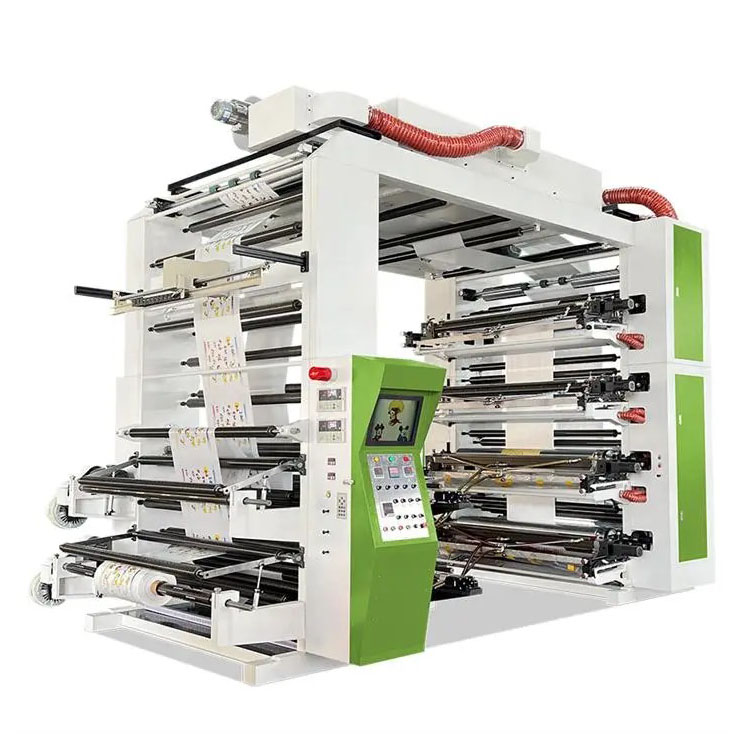
Table of Contents
- 1. What Is a Stack Flexo Printer?
- 2. How Does a Stack Flexo Printer Work?
- 3. Key Benefits of Using a Stack Flexo Printer
- 4. Technical Features and Parameters
- 5. Types of Stack Flexo Printers
- 6. How to Select the Right Stack Flexo Printer
- 7. Installation and Maintenance Tips
- 8. Frequently Asked Questions
- 9. Conclusion
1. What Is a Stack Flexo Printer?
A Stack Flexo Printer is a specialized printing machine that uses flexographic plates mounted on stacked printing units to print high-quality graphics on various substrates, including paper, film, and cardboard. Its modular design allows multiple colors to be printed in a single pass, improving efficiency and ensuring color alignment. This type of printer is commonly used in packaging, label production, and commercial printing industries.
2. How Does a Stack Flexo Printer Work?
The working principle of a Stack Flexo Printer involves transferring ink from a flexible plate to the substrate through an anilox roller. Each stacked unit handles one color, enabling precise color registration and rapid multi-color printing.
- Ink is transferred from the anilox roller to the flexographic plate
- The plate applies the image onto the substrate with consistent pressure
- Multiple stacked units allow sequential printing of different colors
- Drying systems ensure rapid curing between printing stages
- Control systems maintain speed, tension, and registration accuracy
3. Key Benefits of Using a Stack Flexo Printer
Stack Flexo Printers offer significant advantages over traditional printing methods, helping businesses improve output quality, reduce waste, and lower operational costs.
- High Efficiency: Multiple colors printed in a single pass reduce production time
- Superior Print Quality: Consistent ink transfer and precise registration
- Versatile Material Compatibility: Prints on paper, plastic film, and corrugated materials
- Reduced Waste: Accurate color registration minimizes substrate and ink waste
- Scalability: Modular stacking units allow for easy expansion
4. Technical Features and Parameters
| Parameter | Description |
| Printing Speed | Up to 300 meters per minute depending on model |
| Color Units | Modular stack, typically 4–10 units |
| Substrate Width | Flexible range to accommodate different packaging sizes |
| Plate Type | Photopolymer or rubber flexo plates |
| Ink Type | Water-based, solvent-based, or UV-curable inks |
| Drying System | Infrared, hot air, or UV curing |
| Control System | PLC or touchscreen interface with tension and registration control |
HuiPeng offers Stack Flexo Printers designed for precise color control, high-speed production, and reliable long-term performance, meeting diverse printing industry needs.
5. Types of Stack Flexo Printers
Understanding the available types helps users select the most suitable model for their production requirements.
- Single-Pass Stack Flexo Printer: Prints all colors in one pass; ideal for high-volume production
- Modular Stack Flexo Printer: Allows adding or removing units based on production needs
- UV Stack Flexo Printer: Uses UV-curable inks for fast drying and enhanced color vibrancy
- Water-Based Flexo Printer: Environmentally friendly option with safer inks
6. How to Select the Right Stack Flexo Printer
Choosing the right Stack Flexo Printer requires careful assessment of production requirements, substrate types, and desired print quality.
- Production Volume: High-speed printers for large-scale operations
- Substrate Compatibility: Ensure printer supports paper, film, or cardboard as needed
- Color Units: Determine number of colors required for your products
- Ink Type: Decide between water-based, solvent-based, or UV inks
- Automation Level: Touchscreen control, tension management, and registration systems for efficiency
Consulting with the manufacturer can help select a model that balances cost, productivity, and quality.
7. Installation and Maintenance Tips
Proper installation and routine maintenance are critical to ensure optimal performance and long-term reliability.
- Install on a level surface with proper power supply
- Ensure all printing units are correctly aligned
- Clean anilox rollers and plates regularly to maintain print quality
- Check tension and registration settings before each run
- Schedule preventive maintenance according to manufacturer guidelines
Following these practices reduces downtime, minimizes waste, and prolongs machine life.
8. Frequently Asked Questions
Q1: What types of substrates can a Stack Flexo Printer handle?
It can print on paper, film, corrugated boards, and other flexible packaging materials.
Q2: How fast can a Stack Flexo Printer operate?
Depending on the model, printing speed can reach up to 300 meters per minute while maintaining high quality.
Q3: Are there environmentally friendly options?
Yes, water-based ink models and UV-curable ink systems reduce environmental impact.
Q4: Is operator training required?
Proper training is recommended to manage color registration, substrate handling, and maintenance.
9. Conclusion
Stack Flexo Printers represent a highly efficient and versatile solution for modern printing operations. They improve color accuracy, reduce waste, and boost production efficiency, making them ideal for packaging and label manufacturing.
HuiPeng provides Stack Flexo Printers engineered for durability, precision, and high-speed performance, helping businesses achieve consistent results and maximize productivity.
To explore our Stack Flexo Printer range and receive professional guidance tailored to your production needs, contact us today and start enhancing your printing operations.