

How Does a Pockels Cell Driver Enable High-Speed Electro-Optic Modulation in Precision Laser Systems?
2026-07-01
Abstract
A Pockels Cell Driver is a critical electronic subsystem used in electro-optic modulation systems to control the optical properties of a Pockels cell with extremely high precision and speed. It enables rapid voltage switching to manipulate laser polarization, pulse shaping, and beam gating in advanced photonics applications. This article explains the working principles, key technical challenges, selection criteria, and real-world use cases of Pockels Cell Drivers, helping engineers and system integrators understand how to optimize performance in demanding optical environments.
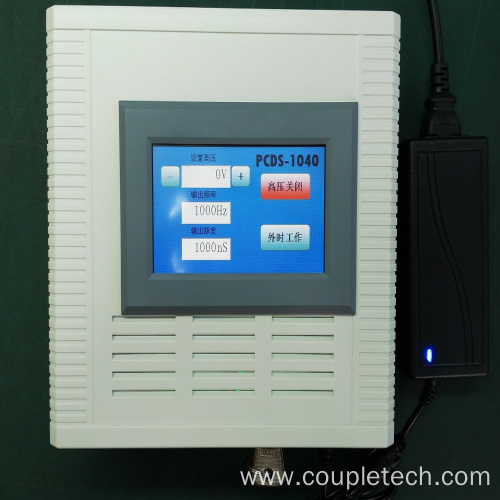
Table of Contents
- 1. Introduction to Pockels Cell Driver Technology
- 2. Working Principle of a Pockels Cell Driver
- 3. System Architecture and Signal Flow
- 4. Key Applications in Modern Photonics
- 5. Engineering Challenges and Pain Points
- 6. How to Select the Right Pockels Cell Driver
- 7. Performance Comparison Table
- 8. Troubleshooting and Optimization Tips
- 9. Future Trends in Electro-Optic Driving Systems
- 10. FAQ
- 11. Conclusion
1. Introduction to Pockels Cell Driver Technology
In modern laser systems, precise control of light is not optional—it is essential. A Pockels cell, based on the electro-optic effect, changes its birefringence when an electric field is applied, allowing modulation of polarized light at nanosecond or even sub-nanosecond speeds. However, the Pockels cell itself cannot function without a dedicated high-voltage switching unit known as a Pockels Cell Driver.
The driver is responsible for generating fast, stable, and accurately timed high-voltage pulses that control the optical switching behavior. Without it, advanced applications such as Q-switching, laser pulse picking, and optical gating would not be possible.
2. Working Principle of a Pockels Cell Driver
The Pockels Cell Driver operates by converting low-voltage trigger signals into high-voltage electrical pulses. These pulses are then applied to the electro-optic crystal inside the Pockels cell, inducing a change in refractive index through the Pockels effect.
The core operation involves three stages:
- Signal Triggering: A TTL or digital pulse initiates the switching event.
- Pulse Amplification: The driver rapidly boosts the signal to kilovolt-level output.
- Voltage Stabilization: The system maintains waveform integrity during pulse delivery.
The speed and stability of this conversion process directly determine the performance of the optical system.
3. System Architecture and Signal Flow
A typical Pockels Cell Driver architecture is composed of several functional modules designed to ensure precision and safety.
- Input trigger conditioning circuit
- High-speed switching transistor or MOSFET stage
- Energy storage capacitor bank
- High-voltage pulse shaping network
- Output impedance matching stage
- Protection and feedback control system
Each subsystem plays a role in minimizing jitter, reducing rise time, and maintaining consistent pulse amplitude under varying load conditions.
4. Key Applications in Modern Photonics
Pockels Cell Drivers are widely used across scientific, industrial, and defense-grade laser systems. Their precision makes them indispensable in applications where timing accuracy and beam control are critical.
- Q-switched laser systems for material processing
- Ultrafast laser pulse selection in research laboratories
- Optical communication modulation systems
- Medical laser surgery equipment
- Laser radar (LiDAR) and ranging systems
In each case, the driver ensures that optical modulation occurs with minimal delay and maximum repeatability.
5. Engineering Challenges and Pain Points
Designing and operating a Pockels Cell Driver involves several technical challenges that directly affect system performance.
| Challenge | Description | Impact on System |
|---|---|---|
| High Voltage Stability | Maintaining consistent kilovolt output without drift | Pulse distortion and optical noise |
| Switching Speed | Rapid rise and fall times for nanosecond control | Reduced modulation accuracy |
| Thermal Management | Heat generated during high-frequency switching | Component degradation |
| Electromagnetic Interference | Noise coupling from high-voltage circuits | Timing jitter and instability |
Addressing these issues requires careful circuit design, shielding techniques, and high-quality component selection.
6. How to Select the Right Pockels Cell Driver
Choosing the correct driver is essential for achieving optimal optical performance. Engineers must evaluate both electrical and optical system requirements.
Key selection criteria include:
- Output voltage range compatibility with Pockels cell
- Rise time and fall time specifications
- Repetition rate capability
- Jitter performance
- Thermal stability under continuous operation
A mismatch between driver and Pockels cell can lead to inefficient modulation or even system damage.
7. Performance Comparison Table
| Parameter | Standard Driver | High-Performance Driver |
|---|---|---|
| Rise Time | 10–20 ns | 1–5 ns |
| Output Voltage | 1–3 kV | 3–10 kV |
| Repetition Rate | Up to 1 kHz | Up to 100 kHz |
| Timing Jitter | High | Ultra-low |
8. Troubleshooting and Optimization Tips
Even well-designed systems can encounter performance degradation over time. The following strategies help maintain optimal operation:
- Regular inspection of high-voltage connectors to prevent arcing
- Calibration of trigger timing circuits for reduced jitter
- Thermal monitoring of driver components under load
- Shielding upgrades to reduce EMI interference
- Periodic waveform analysis using high-speed oscilloscopes
Consistent maintenance ensures long-term stability and reliability of laser modulation systems.
9. Future Trends in Electro-Optic Driving Systems
The evolution of Pockels Cell Driver technology is driven by increasing demand for faster, more compact, and more energy-efficient photonic systems. Emerging trends include:
- Integration of digital control algorithms for adaptive pulse shaping
- Miniaturized high-voltage semiconductor switching modules
- AI-assisted waveform optimization in real time
- Improved thermal design using advanced materials
These advancements are expected to significantly enhance the precision and efficiency of laser-based systems across multiple industries.
10. FAQ
Q1: What is the main role of a Pockels Cell Driver?
It generates precise high-voltage pulses to control the optical switching behavior of a Pockels cell.
Q2: Why is switching speed important?
Faster switching allows more accurate pulse shaping and improved system resolution.
Q3: Can one driver be used for all Pockels cells?
No. Drivers must be matched to the voltage, capacitance, and response characteristics of the specific Pockels cell.
Q4: What affects long-term reliability?
Thermal stress, voltage instability, and EMI exposure are the primary factors affecting reliability.
11. Conclusion
A Pockels Cell Driver is a foundational component in modern electro-optic systems, enabling precise control of laser beams with extreme temporal accuracy. Its performance directly affects the efficiency, stability, and precision of photonic applications ranging from industrial machining to scientific research.
Advanced engineering practices, careful system matching, and proper maintenance are essential to fully leverage its capabilities. For high-performance and reliable solutions, Coupletech Co., Ltd. provides specialized Pockels Cell Driver systems designed to meet demanding optical requirements across global industries.
To explore technical specifications, customization options, or integration support, contact us today and discover how Coupletech Co., Ltd. can enhance your photonic system performance.