

How Does a Rotogravure Printing Machine Improve High-Volume Printing?
2026-08-26
Article Summary: A rotogravure printing machine is designed for manufacturers that need high-quality, repeatable printing at industrial production volumes. By using engraved cylinders, controlled ink transfer, precision web handling, and continuous drying, the process can deliver strong color density, fine image detail, and consistent results over long production runs. This article explains how the machine works, which components influence print quality, what materials it can process, how to reduce common production problems, and what buyers should evaluate before investing in a rotogravure printing machine.
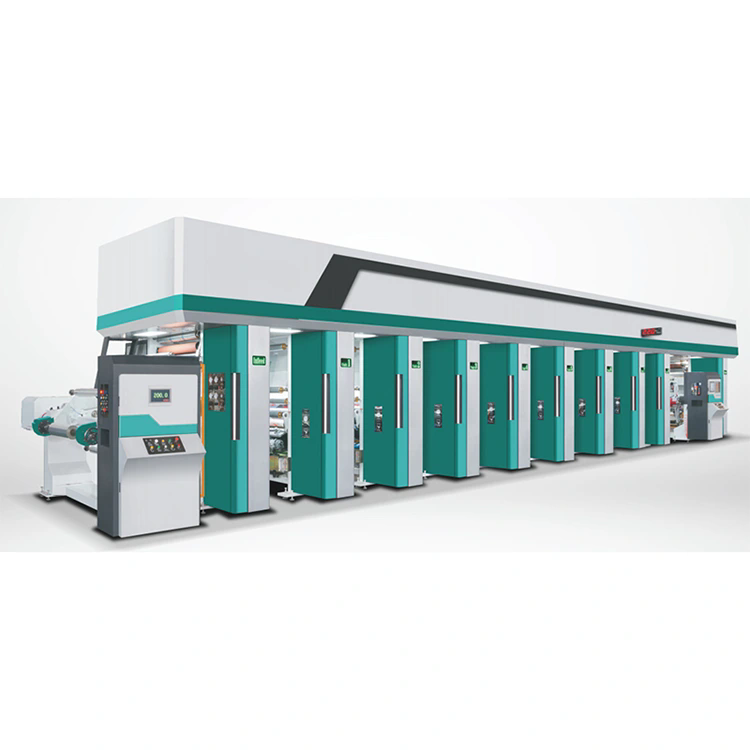
Article Outline
- Understanding the role of a rotogravure printing machine
- How the rotogravure printing process works
- Key machine components and their functions
- Why rotogravure printing is suitable for long production runs
- Materials and applications
- Common production problems and practical solutions
- Important factors when choosing a machine
- How Green Ohm supports flexible packaging production
- Maintenance and operating practices
- Frequently Asked Questions
Table of Contents
- What Is a Rotogravure Printing Machine?
- How Does a Rotogravure Printing Machine Work?
- What Are the Main Components?
- Why Is Rotogravure Printing Effective for High-Volume Production?
- What Materials Can Be Printed?
- How Can Common Printing Problems Be Reduced?
- What Should Buyers Consider Before Purchasing?
- How Does Green Ohm Support Printing Production?
- How Can Machine Performance Be Maintained?
- Frequently Asked Questions
- Final Considerations
What Is a Rotogravure Printing Machine?
A rotogravure printing machine is an industrial printing system that transfers ink from an engraved cylindrical image carrier onto a continuously moving substrate. Unlike processes that rely on a raised or flat image surface, gravure printing uses thousands of recessed cells engraved into the cylinder. These cells hold controlled quantities of ink and reproduce images, text, gradients, and solid colors as the cylinder rotates.
This operating principle makes rotogravure particularly valuable when a manufacturer needs consistent print quality across large quantities. The Global Rotogravure Association describes gravure as a computer-controlled manufacturing process recognized for high print quality, output consistency, versatility, and speed. Its applications include flexible packaging, decorative materials, publications, security printing, and technical applications.
For packaging manufacturers, the machine is not simply a printer. It is part of a continuous production system in which substrate feeding, tension management, ink transfer, color registration, drying, and winding must work together. If one area is poorly controlled, operators may experience waste, unstable color, wrinkles, streaks, or registration errors.
Therefore, selecting the right rotogravure printing machine requires more than comparing maximum speed. The actual production requirements, substrate characteristics, color configuration, cylinder specifications, drying capacity, automation level, and after-sales support should all be considered.
How Does a Rotogravure Printing Machine Work?
The basic gravure process is continuous and relatively straightforward in principle, but accurate execution requires close coordination between multiple systems. A typical sequence includes cylinder preparation, ink application, excess ink removal, ink transfer, drying, web transport, and winding.
- Engraved cylinder preparation: The artwork is transferred onto a cylindrical printing surface. Tiny recessed cells are created according to the required image and tonal information.
- Ink pickup: As the cylinder rotates through the ink system, the recessed cells become filled with liquid ink.
- Doctor blade wiping: A doctor blade removes excess ink from the cylinder surface while allowing ink to remain inside the engraved cells.
- Ink transfer: The substrate passes between the engraved cylinder and an impression roller. Pressure helps transfer ink from the cells onto the substrate.
- Drying: The freshly printed web enters a drying section so the ink can set before the next color or subsequent processing stage.
- Color registration: Each printing unit must maintain accurate alignment with the previous color to produce a clean multi-color image.
- Web transport and winding: Tension control keeps the substrate stable as it travels through the press and is finally rewound.
The engraved cells play a particularly important role. Cell volume, depth, geometry, and distribution influence how much ink reaches the substrate. Larger or deeper cells can carry more ink, while changes in cell structure influence tonal reproduction. This allows gravure to reproduce detailed images and strong color densities over extended runs.
What Are the Main Components of a Rotogravure Printing Machine?
Understanding the major systems helps buyers identify where machine performance comes from. A reliable press is a coordinated system rather than a collection of independent components.
| Component | Primary Function | Production Impact |
|---|---|---|
| Gravure Cylinder | Carries engraved image cells and transfers ink | Influences image detail, tonal reproduction, and ink volume |
| Doctor Blade System | Removes excess ink from the cylinder surface | Affects print cleanliness and ink consistency |
| Impression Roller | Presses the substrate against the cylinder | Supports stable ink transfer and print definition |
| Ink System | Supplies and circulates printing ink | Influences color stability and ink availability |
| Drying System | Removes solvent or moisture after printing | Helps prevent smearing and supports faster production |
| Tension Control | Controls substrate tension throughout the web path | Reduces stretching, wrinkles, and registration problems |
| Register Control | Maintains alignment between colors | Improves multi-color image accuracy |
| Winding System | Rewinds the printed web | Determines roll quality and downstream usability |
For example, Green Ohm offers electronic-shaft rotogravure equipment with servo-driven control and accurate color registration for multi-color printing on plastic films and paper. Its product range also includes computerized configurations with multiple motor arrangements, providing different options for manufacturers with different production requirements.
Why Is Rotogravure Printing Effective for High-Volume Production?
Rotogravure is generally selected when production volume and repeatability justify the preparation and investment required for engraved cylinders. Once the cylinders are prepared and the press is properly set up, the process can maintain highly consistent reproduction over long runs.
Its major benefits include:
- Consistent color reproduction: Controlled engraved cells provide repeatable ink transfer from one production section to another.
- Fine image reproduction: The recessed-cell structure supports detailed graphics, gradients, photographs, and small visual elements.
- High production efficiency: Continuous web handling allows large quantities of material to be processed without repeatedly stopping for individual sheets.
- Long-run economy: Cylinder preparation costs can be justified when the same artwork is produced in substantial quantities.
- Broad substrate compatibility: Gravure is widely used for films, paper, foils, laminates, and other web materials.
- Strong repeatability: Once process parameters are stabilized, subsequent production runs can reproduce established artwork with limited variation.
Industry guidance identifies excellent sharpness, color consistency, controlled ink film weight, high speed, and long cylinder life among the advantages associated with gravure printing. At the same time, the process can involve higher preparation and equipment costs than some alternatives, making production volume an important purchasing consideration.
What Materials Can Be Printed?
A major reason manufacturers consider a rotogravure printing machine is its ability to handle different web substrates. The exact substrate range depends on machine configuration, ink system, drying technology, web width, tension requirements, and the customer's production process.
| Substrate Category | Typical Applications | Important Considerations |
|---|---|---|
| Plastic Films | Flexible packaging, pouches, wrappers | Tension, ink adhesion, drying, and registration |
| Paper | Packaging, decorative paper, publications | Surface properties, ink absorption, and web stability |
| Foil | Specialized packaging and decorative applications | Precise tension and suitable ink handling |
| Laminated Webs | Multilayer packaging and decorative products | Surface compatibility and downstream converting |
Common applications include flexible packaging, decorative papers, furniture and flooring materials, labels, wallpaper, wrapping products, publications, and other specialty printed materials.
For flexible packaging manufacturers, the most important question is not simply whether a machine can print a particular material. The machine must maintain substrate stability throughout the entire web path. Thin films can be particularly sensitive to tension changes, temperature, and mechanical alignment, so the press configuration should be matched to the actual material portfolio.
How Can Common Printing Problems Be Reduced?
Even a technically capable printing press can produce unsatisfactory results if operating conditions are poorly matched to the substrate, ink, cylinder, or production speed. Identifying the source of a problem before changing multiple parameters can save substantial material and production time.
1. Uneven Color Density
Uneven color may result from inconsistent ink conditions, cylinder issues, doctor blade pressure, substrate variation, or unstable machine parameters. Operators should first confirm ink consistency and cylinder condition before making major speed adjustments.
2. Color Registration Errors
Registration problems are often associated with web tension changes, substrate stretching, inaccurate sensor feedback, mechanical alignment, or inappropriate machine settings. Stable tension control and reliable register monitoring are essential for multi-color production.
3. Streaks and Lines
Streaking can be related to the doctor blade, cylinder surface, ink contamination, or mechanical vibration. Keeping the ink system clean and inspecting wear components at appropriate intervals can reduce unexpected defects.
4. Ink Smearing
If ink does not dry adequately before the next process stage, the printed surface may become vulnerable to smearing or blocking. Drying capacity should therefore be evaluated together with ink type, substrate, line speed, and the amount of ink being transferred.
5. Material Wrinkles
Web wrinkles can create both visual defects and downstream converting problems. Operators should examine tension settings, roller alignment, substrate characteristics, and winding conditions rather than treating the problem as a printing-cylinder issue alone.
A practical troubleshooting approach is to change one variable at a time whenever production conditions allow. This makes it easier to determine whether the problem originates from ink, cylinder preparation, web handling, drying, or mechanical adjustment.
What Should Buyers Consider Before Purchasing?
Purchasing a rotogravure printing machine is a long-term production decision. The machine should be selected according to the customer's actual operating environment rather than based only on advertised maximum speed.
- Required printing width: Determine the normal substrate width and the expected range of future jobs.
- Number of colors: Consider current product requirements as well as likely expansion into more complex packaging designs.
- Production volume: High-volume, repeat-production work is where the economic advantages of gravure can become especially meaningful.
- Substrate range: Confirm that the machine is suitable for every important material in the production plan.
- Register accuracy: Multi-color packaging requires reliable registration control, particularly when detailed graphics are involved.
- Tension control: This is critical for thin and flexible materials because dimensional changes can affect print registration and winding quality.
- Drying requirements: The drying system should be evaluated according to ink chemistry, substrate, coating weight, and intended production speed.
- Automation: Automated controls can reduce operator workload and help maintain repeatable production parameters.
- Maintenance accessibility: Routine cleaning, inspection, replacement, and adjustment should be practical for the production team.
- Technical support: Installation assistance, commissioning, spare parts, troubleshooting, and training can significantly affect long-term equipment performance.
Another important point is future production growth. A machine that perfectly matches today's requirements but has no practical room for tomorrow's product mix may create additional capital expenditure later. Buyers should therefore consider not only current specifications but also expected market and product development.
How Does Green Ohm Support Printing Production?
Green Ohm is a professional printing and packaging machinery manufacturer based in Ruian, Wenzhou, a major manufacturing center for printing and packaging equipment in China. The company provides rotogravure printing machines together with equipment used in flexible packaging and converting production. Its product portfolio includes rotogravure presses, flexographic printing machines, bag making machines, slitting and cutting machines, lamination machines, and die-cutting equipment.
The company's rotogravure range includes electronic-shaft configurations, computerized automatic presses, multi-color machines, and equipment designed for different production speeds. This gives buyers the opportunity to evaluate machine configurations according to substrate, color requirements, production volume, and automation needs rather than selecting a single standardized solution.
Green Ohm also emphasizes research and development, manufacturing, sales, and after-sales support as part of its overall service approach. For customers investing in industrial printing equipment, this integrated support structure can be valuable because installation, commissioning, operator training, maintenance, and troubleshooting all influence the practical value of a press over its operating life.
When evaluating a Green Ohm rotogravure printing machine, customers should provide detailed information about substrate type, material thickness, printing width, number of colors, target production volume, ink system, artwork requirements, and downstream converting processes. The more complete the production information, the easier it is to configure equipment around actual manufacturing conditions.
How Can Machine Performance Be Maintained?
Preventive maintenance is essential for a high-speed printing system. Small issues can become expensive production problems when they remain unnoticed during continuous operation.
- Inspect doctor blades regularly and replace worn components when necessary.
- Keep ink circulation systems clean to reduce contamination-related defects.
- Inspect cylinders for damage, contamination, or abnormal wear.
- Check rollers and web-contact surfaces for buildup or mechanical damage.
- Monitor web tension during different production stages.
- Keep sensors and registration-control components clean and correctly positioned.
- Inspect drying equipment and airflow pathways according to the manufacturer's maintenance recommendations.
- Check electrical and drive systems for abnormal vibration, temperature, or operating behavior.
- Record recurring production defects so operators can identify patterns before they become serious downtime events.
- Follow the machine manufacturer's recommended inspection and service intervals.
Good maintenance should not focus only on repairing failures. The objective is to keep critical machine parameters within a stable operating range so that print quality remains predictable throughout production.
Frequently Asked Questions
What is the main advantage of a rotogravure printing machine?
The main advantage is the combination of high print quality, repeatability, and efficient long-run production. It is especially suitable when manufacturers need consistent images and colors across large quantities.
Is rotogravure suitable for flexible packaging?
Yes. Flexible packaging is one of the major applications for gravure printing. The process can be used with various films and other web materials when the machine, ink, drying system, and tension controls are correctly matched to the substrate.
Why does rotogravure use engraved cylinders?
The engraved cells act as controlled ink reservoirs. Their structure determines the amount of ink transferred and contributes to tonal and color reproduction.
Is rotogravure economical for short production runs?
It depends on the job. Cylinder preparation and equipment investment can make gravure less attractive for short runs compared with processes that have lower preparation costs. Its economic strength is generally more apparent in high-volume or repeat production.
How does web tension affect printing quality?
Unstable tension can cause substrate movement, stretching, wrinkles, and color registration errors. Stable web handling is therefore an important part of reliable multi-color printing.
How many colors can a rotogravure printing machine print?
The number depends on the specific press configuration. Green Ohm offers different rotogravure configurations, including multi-color computerized machines, allowing customers to select equipment according to their product requirements.
What should I provide when requesting a rotogravure machine quotation?
Useful information includes substrate material, thickness, maximum and minimum web width, number of colors, expected production speed, ink type, cylinder specifications, printing repeat, annual production volume, and any special automation or converting requirements.
Can a rotogravure printing machine be customized?
Industrial printing requirements vary significantly between manufacturers. Green Ohm states that it welcomes non-standard customization, so customers can discuss specific production requirements when selecting a suitable configuration.
Final Considerations
A modern rotogravure printing machine combines precision cylinder technology, controlled ink transfer, web tension management, color registration, drying, and continuous winding into one production system. Its greatest value appears when manufacturers need high-volume output without sacrificing consistent image quality.
However, high printing speed alone does not guarantee good production results. The right balance between substrate characteristics, cylinder design, ink behavior, drying capacity, tension control, register accuracy, automation, maintenance, and operator practices is what determines real-world performance.
For packaging manufacturers planning new capacity or replacing existing printing equipment, the best approach is to define the production requirements first and then select the press configuration around those requirements. Green Ohm provides a range of rotogravure printing solutions for flexible packaging and related applications, with options covering different machine configurations and production needs.
Looking for a rotogravure printing machine that matches your substrate, printing width, color configuration, and production goals? Contact Green Ohm to discuss your application requirements and find a suitable printing solution. Contact us today to start your project.