

How Does a Sheet Tube Laser Cutting Machine Solve Manufacturing Challenges?
2026-02-06
Summary: Modern manufacturing demands precision, flexibility, fast throughput, and cost control. A Sheet Tube Laser Cutting Machine integrates advanced laser technology to meet these core requirements. This article details how this equipment tackles common production pain points, compares key performance indicators, and helps decision makers understand when and why this technology is the right investment for sheet and tube cutting applications.
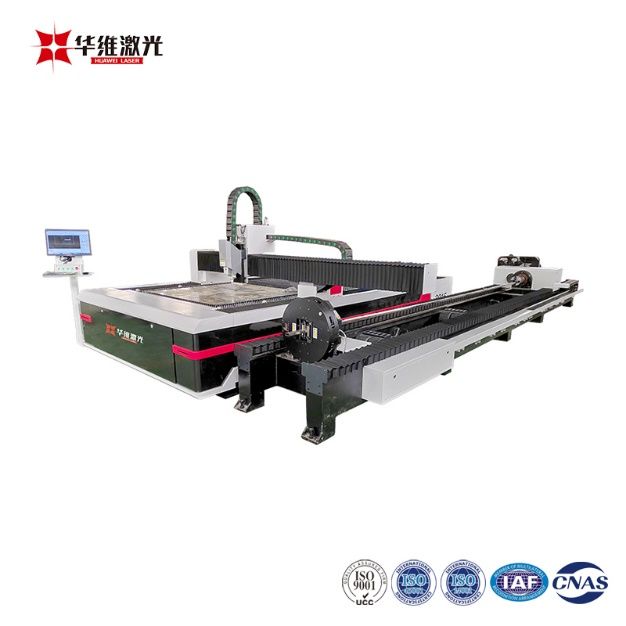
Table of Contents
- Overview of Sheet Tube Laser Cutting Technology
- Common Manufacturing Pain Points
- How the Machine Solves These Challenges
- Performance Comparison Table
- Tips for Integrating Laser Cutting in Production
- Frequently Asked Questions
- Conclusion & Contact
Overview of Sheet Tube Laser Cutting Technology
Sheet Tube Laser Cutting Machines combine laser precision with automated motion systems to cut flat sheets and round or square tubes from metals such as carbon steel, stainless steel, aluminum, and various alloys. By leveraging high-energy laser beams, these systems generate heat that instantly melts or vaporizes material, producing clean, accurate cuts with minimal secondary finishing.
This dual-capability equipment is widely adopted in industries including automotive, aerospace, construction, furniture manufacturing, and custom fabrication shops where mixed part geometries and high precision are required.
Common Manufacturing Pain Points
Manufacturers face a range of challenges that directly impact product quality, delivery timelines, and cost structures. These include:
- Poor Precision: Inconsistent cuts and edge quality lead to higher scrap rates and rework.
- Slow Throughput: Manual or outdated cutting methods slow down production lines.
- Material Waste: Inefficient nesting or cutting strategies increase raw material costs.
- High Labor Costs: Skilled operators are expensive and hard to retain.
- Flexibility Limits: Frequent changeovers and multiple machines for different profiles complicate operations.
How the Machine Solves These Challenges
Below are the key solution areas provided by a Sheet Tube Laser Cutting Machine:
1. High Precision and Consistency
Laser cutting delivers micron-level accuracy. This precision reduces tolerance stack-up, ensuring parts fit correctly in assemblies without additional grinding or finishing. Features such as autofocus heads and real-time power modulation keep cut quality consistent across different materials and thicknesses.
2. Increased Production Throughput
Automated loading and unloading systems, integrated CAM software, and optimized cutting paths reduce idle time. This results in higher daily output compared with conventional mechanical cutting methods. Batch processing of sheets and tubes also minimizes setup delays.
3. Reduced Material Waste
Advanced nesting algorithms maximize material usage by minimizing gaps between cut patterns. This efficient material utilization directly lowers raw material expenses and supports sustainability targets.
4. Lower Labor Dependency
Once programmed, laser machines operate with limited supervision. This reduces reliance on highly skilled manual operators and enables workforce allocation to higher-value tasks within the facility.
5. Enhanced Flexibility for Mixed Production
Modern systems handle varying geometries without physical tool changes. This allows manufacturers to switch between sheet and tube jobs within the same production flow, supporting custom orders and just-in-time delivery requirements.
Performance Comparison Table
| Metric | Traditional Plasma Cutting | Sheet Tube Laser Cutting |
|---|---|---|
| Cut Precision (mm) | ±0.5 to ±1.0 | ±0.05 to ±0.2 |
| Edge Finish | Rough, requires finishing | Clean, minimal finishing |
| Material Utilization | 70%–80% | 85%–95% |
| Setup Time | 20–45 minutes | 5–15 minutes |
| Operator Skill | High | Moderate |
Tips for Integrating Laser Cutting in Production
Adopting a Sheet Tube Laser Cutting Machine can be transformative when supported by thoughtful implementation:
- Evaluate Part Mix: Review your product portfolio to determine common sheet and tube profiles for batching opportunities.
- Plan for Software Integration: Connect the machine’s control software with existing CAD/CAM systems to eliminate redundant data entry.
- Train Operators: Provide focused training to operators and programmers, emphasizing safety and maintenance routines.
- Monitor Performance: Establish KPIs such as cut quality scores, throughput rates, and yield percentages to evaluate ROI.
Frequently Asked Questions
What materials can a Sheet Tube Laser Cutting Machine process?
These systems can cut a wide range of metals including mild steel, stainless steel, aluminum, brass, and copper. Material thickness capability varies by laser power and optics configuration, typically ranging from thin gauge sheets to medium-thick tubes.
Is laser cutting more cost-effective than traditional cutting?
Laser cutting may have higher upfront costs but delivers lower operating expenses over time through reduced waste, faster cycles, and decreased labor costs, resulting in a favorable total cost of ownership.
Can the machine switch between sheet and tube jobs automatically?
Yes, many modern models support dual loading stations and automated part feeding that enable seamless transitions between sheet and tube cutting without significant downtime.
How does maintenance affect machine uptime?
Routine maintenance such as lens cleaning, calibration checks, and airflow monitoring helps maintain precision and extend the operational lifespan of key components. Preventative schedules minimize unplanned downtime.
Conclusion & Contact
For manufacturers facing pressure to increase precision, reduce waste, and accelerate production, a Sheet Tube Laser Cutting Machine represents a compelling solution. By leveraging high-speed, automated laser technology, businesses can achieve consistent quality across varied part geometries while improving material utilization and lowering operational costs.
If you are evaluating advanced cutting solutions, Huawei Laser offers a range of high-performance Sheet Tube Laser Cutting Machines engineered for reliability and precision across industries. Our team can help you select the right configuration for your production needs, optimize integration, and support long-term performance.
Ready to transform your cutting operations? Contact us today for a tailored consultation and quote!