

How Does UV Label Printing Compare with Conventional Label Printing Methods?
2026-11-09
A brand manager sends the same label artwork to three converters. The first quote uses UV flexo, the second uses conventional solvent flexo, and the third uses UV digital. The unit prices differ by a factor of three, and the delivery times differ by two weeks. The brand manager asks which process is actually better. The answer depends on the label's service life, the substrate, the run length, and the visual requirement. UV Label Printing is not universally superior to conventional printing. It is superior in specific conditions and inferior in others. This guide explains those conditions so that the buyer can compare quotes on a like-for-like basis.
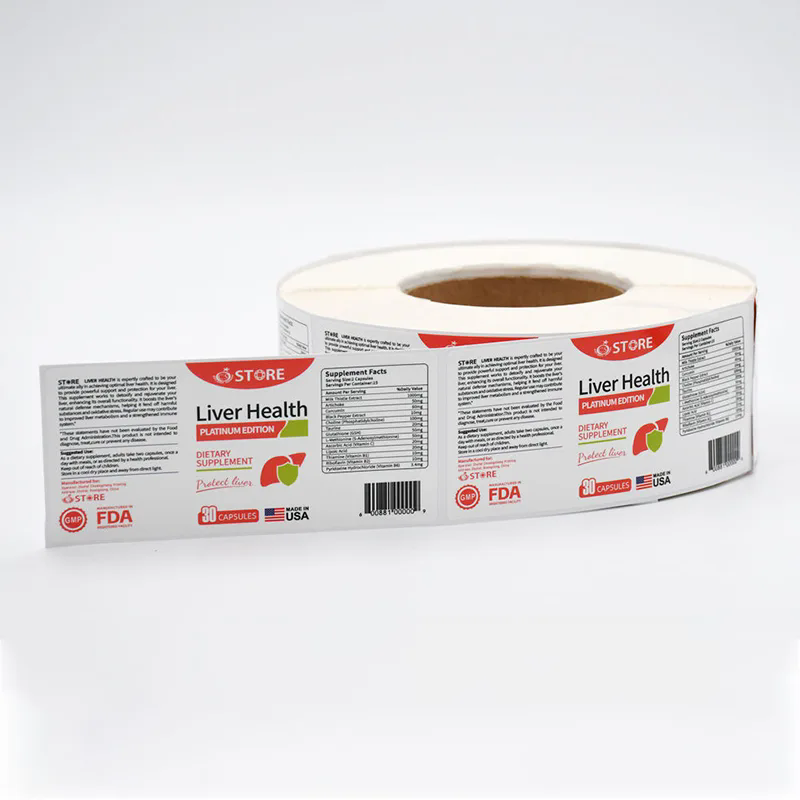
1. Why Do UV and Conventional Label Printing Produce Different Results on the Same Substrate?
The fundamental difference is the curing mechanism. Conventional solvent or water-based inks dry by evaporation. The solvent or water leaves the ink film, and the resin remains on the substrate. The evaporation takes time and energy, and it can cause the substrate to shrink or curl. UV inks cure by polymerization. The photoinitiators in the ink absorb ultraviolet light and cross-link the resin into a solid film in a fraction of a second. The curing is instantaneous, and it does not depend on evaporation. This difference explains why UV Label Printing produces a sharper dot, a higher gloss, and a more durable film than conventional printing on the same substrate. In our factory, we supply UV-curable inks and coatings for label converters. Nextgen Advanced Materials INC has been supplying UV materials for over 10 years.
The instantaneous cure also means that UV printing can be used on heat-sensitive substrates such as thin films and shrink sleeves, because the substrate is not exposed to a long drying oven. Conventional printing on the same substrate may cause distortion or require a slower line speed.
2. How Do the Main Label Printing Processes Compare on Quality and Durability?
There are four common processes for label production. UV flexo uses a photopolymer plate and a UV-curable ink. Conventional flexo uses the same plate but a solvent or water-based ink. UV digital uses an inkjet print head and a UV-curable ink. Conventional offset uses a lithographic plate and an offset ink. The table below compares the four processes on the criteria that matter most to a label buyer.
| Process | Typical resolution | Outdoor durability | Minimum run length | Relative unit cost |
| UV flexo | 150 – 175 lpi | Excellent (2 – 5 years) | 5,000 – 10,000 labels | Moderate |
| Conventional flexo | 133 – 150 lpi | Good (1 – 3 years) | 5,000 – 10,000 labels | Low |
| UV digital | 300 – 600 dpi | Very good (2 – 4 years) | 100 – 1,000 labels | High for long runs, low for short runs |
| Conventional offset | 175 – 200 lpi | Moderate (1 – 2 years) | 20,000 – 50,000 labels | Low for long runs |
In our factory, we recommend UV flexo for labels that will be exposed to sunlight, moisture, or chemicals for more than two years. We recommend conventional flexo for short-life labels such as promotional packaging that will be discarded within a year. We recommend UV digital for short runs and for variable data such as serial numbers and QR codes. The choice is not about which process is newer. It is about which process matches the service life and the run length.
3. Why Does the Run Length Decide Whether UV Is Economical?
UV Label Printing has a higher setup cost than conventional printing because the UV ink and the UV lamp system are more expensive. The plate cost is similar, but the ink cost per square meter is higher. For a long run, the higher ink cost is offset by the faster line speed and the lower waste. For a short run, the higher setup cost dominates, and conventional printing is cheaper per label. The break-even point depends on the ink coverage, the substrate, and the press. In our factory, we have calculated the break-even point for a typical label with 60 percent ink coverage on a coated paper substrate. UV flexo becomes cheaper than conventional flexo above approximately 15,000 labels. Below that volume, conventional flexo is more economical. For UV digital, the break-even point against UV flexo is around 2,000 labels. Below 2,000 labels, UV digital is cheaper because there is no plate cost. Nextgen Advanced Materials INC provides a cost comparison tool for our customers.
The break-even point shifts when the label requires a special effect. A label with a high-gloss spot varnish, a textured touch, or a cold foil requires an additional conventional pass, which adds cost. UV printing can achieve some of these effects in a single pass, which lowers the break-even point.
4. How Do UV and Conventional Labels Perform in Harsh Service Conditions?
The service condition is often the deciding factor. A label on a cosmetic bottle that sits on a bathroom shelf is exposed to moisture and soap. A label on an outdoor equipment panel is exposed to sunlight, rain, and temperature cycling. A label on a chemical drum is exposed to solvents. UV-cured inks form a highly cross-linked film that resists water, alcohol, and abrasion better than conventional inks. The UV film also resists yellowing from ultraviolet light, because the photoinitiators are consumed during curing. Conventional inks contain solvents that can be re-activated by the service chemicals, causing the label to soften or smear. In our factory, we test the cured UV film for adhesion, rub resistance, and chemical resistance according to the FINAT test methods. We provide the test report with each UV ink batch. Nextgen Advanced Materials INC recommends UV printing for any label that will be exposed to hand sanitizer, cleaning agents, or outdoor sunlight.
The substrate also matters. A UV ink adheres well to paper and to treated film, but it may not adhere to untreated polyolefin. In that case, a primer or a corona treatment is required. The converter should verify the adhesion before the production run.
5. How Should Buyers Specify and Verify a UV or Conventional Label Printing Job?
The specification should include five items. The first is the service life and the exposure condition. The second is the substrate. The third is the run length. The fourth is the required visual effect, including gloss, texture, and color accuracy. The fifth is the required durability test. The verification should include three checks. The first is a press proof on the actual substrate. The second is an adhesion test after 24 hours. The third is a durability test that simulates the service condition, such as a rub test, a water immersion test, or a UV exposure test. In our factory, we provide a press proof and a durability test report for each new label design. We also provide a comparison sheet that shows the cost and the performance of UV and conventional printing for the specific job. Nextgen Advanced Materials INC supports the converter with ink selection and cure verification.
We recommend that the buyer not compare quotes that use different processes without normalizing the durability requirement. A conventional quote that appears 40 percent cheaper may not meet the two-year outdoor requirement, and the label may fail in the field. The cost of a field failure, including the rework and the brand damage, is usually higher than the difference in the printing cost.
Frequently Asked Questions About UV and Conventional Label Printing
Summary for Label Buyers and Converters
UV Label Printing differs from conventional printing in the curing mechanism, the durability, the resolution, and the cost structure. UV printing produces a sharper, more durable film that resists water, chemicals, and sunlight. Conventional printing is more economical for short-life labels and for long runs where the durability requirement is low. The choice depends on the service life, the substrate, the run length, and the visual requirement. The buyer should specify the service condition and the durability test, and should compare quotes on a like-for-like basis. Nextgen Advanced Materials INC has been supplying UV materials for over 10 years and provides full ink selection and cure verification support for label converters.