

What Are the Key Technical Specifications of the IFM O6H202
2026-10-12
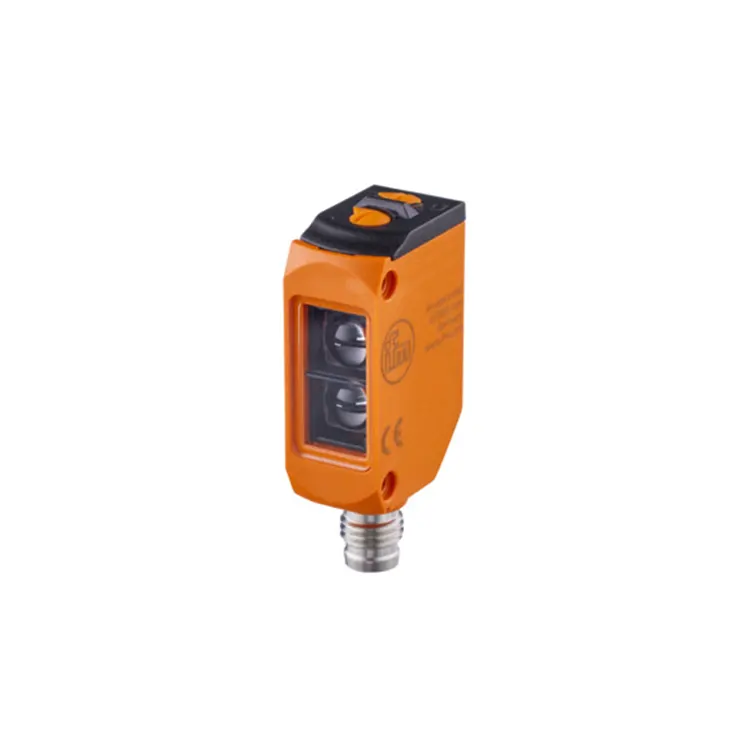
The IFM O6H202 is a diffuse reflection photoelectric sensor engineered for reliable object detection in demanding industrial environments. As a trusted supplier of industrial automation components, Floating Light frequently receives questions about this sensor's capabilities, wiring, and compatibility. Understanding its technical specifications helps engineers select the right device for conveyors, packaging lines, and material handling systems. This guide breaks down the IFM O6H202 specifications in detail, with tables and practical insights drawn from real-world deployments.
Core Technical Specifications of the IFM O6H202
The IFM O6H202 belongs to the O6 series of compact photoelectric sensors. Its diffuse reflection principle means the emitter and receiver sit in a single housing, simplifying mounting and alignment. Below are the primary specifications.
| Parameter | Specification |
|---|---|
| Operating Principle | Diffuse reflection (energetic) |
| Sensing Range | Up to 200 mm (dependent on target) |
| Light Type | Red light, 624 nm |
| Output Function | PNP, normally open / normally closed |
| Operating Voltage | 10–30 V DC |
| Current Rating | 100 mA max |
| Switching Frequency | Up to 1,000 Hz |
| Housing Material | Stainless steel / PBT |
| Protection Rating | IP65 / IP67 |
| Connection | M8 connector, 3-pin |
| Operating Temperature | -25 °C to +60 °C |
| Dimensions | 28 × 8 × 15 mm (approx.) |
Key Performance Highlights
-
Compact housing: The IFM O6H202 fits into tight spaces where larger sensors cannot be mounted.
-
High switching frequency: Suitable for fast-moving assembly and sorting applications.
-
Robust sealing: IP65/IP67 protection supports washdown and dusty environments.
-
Adjustable sensitivity: A potentiometer allows fine-tuning for dark or reflective targets.
Floating Light recommends verifying the target material and surface finish before finalizing the sensing range, since diffuse sensors react differently to matte, glossy, and translucent objects.
Electrical and Mechanical Integration
Correct wiring ensures stable operation and long service life. The IFM O6H202 uses a standard 3-wire configuration.
| Wire Color | Function |
|---|---|
| Brown | +V (10–30 V DC) |
| Blue | 0 V (GND) |
| Black | Switching output (PNP) |
Installation Best Practices
-
Maintain a minimum distance from reflective backgrounds to avoid false triggers.
-
Use the mounting bracket recommended for the O6 series to preserve IP ratings.
-
Keep cable runs away from high-voltage lines to reduce electrical noise.
-
Confirm the output type matches the PLC input card before commissioning.
Floating Light stocks genuine IFM O6H202 sensors and compatible M8 cables, helping customers reduce downtime during replacement or retrofit projects.
IFM O6H202 FAQ
Q: What is the maximum sensing range of the IFM O6H202?
A: The IFM O6H202 detects objects up to approximately 200 mm, though the actual range depends on target size, color, and reflectivity; matte white targets perform best while dark or glossy surfaces may reduce reliable detection distance.
Q: Is the IFM O6H202 suitable for washdown environments?
A: Yes, the IFM O6H202 carries IP65 and IP67 protection ratings, meaning it resists dust ingress and temporary water immersion, making it appropriate for food processing and beverage lines when paired with properly sealed connectors.
Q: Can the IFM O6H202 output be changed from normally open to normally closed?
A: The IFM O6H202 is available in specific output variants, so the NO or NC behavior is determined by the ordered model number; if a different logic state is required, consult Floating Light to select the correct version rather than attempting field modification.
Why Specification Accuracy Matters
Selecting a sensor based on incomplete data leads to misalignment, false triggering, and premature failure. The IFM O6H202 offers a balanced combination of compact size, fast switching, and environmental sealing. Engineers who review the full specification table before installation avoid costly rework and keep production lines running.
Floating Light provides technical documentation, cross-reference support, and same-day shipping for the IFM O6H202 and related automation components.
Contact us today to request a quote, confirm stock availability, or speak with a Floating Light application engineer about the best sensor configuration for your project.