

What Is the Average Cost of an Automatic Window Patching Machine for Small Factories
2026-07-01
For small-scale packaging manufacturers, investing in an Automatic Window Patching Machine is a major capital decision. The average price range for a new entry-level to mid-range Automatic Window Patching Machine typically falls between $18,000 and $45,000 USD, depending on speed, film application method, and feeding system. However, total cost of ownership—including installation, tooling, and training—can push the initial budget to $55,000. For small factories with limited floor space and output volumes (under 5,000 sheets/hour), the sweet spot is often a semi-automatic or compact fully‑automatic model. Feihua, a recognized manufacturer in the post-press equipment sector, offers reliable solutions that balance affordability with industrial-grade durability, making them a frequent choice for growing businesses.
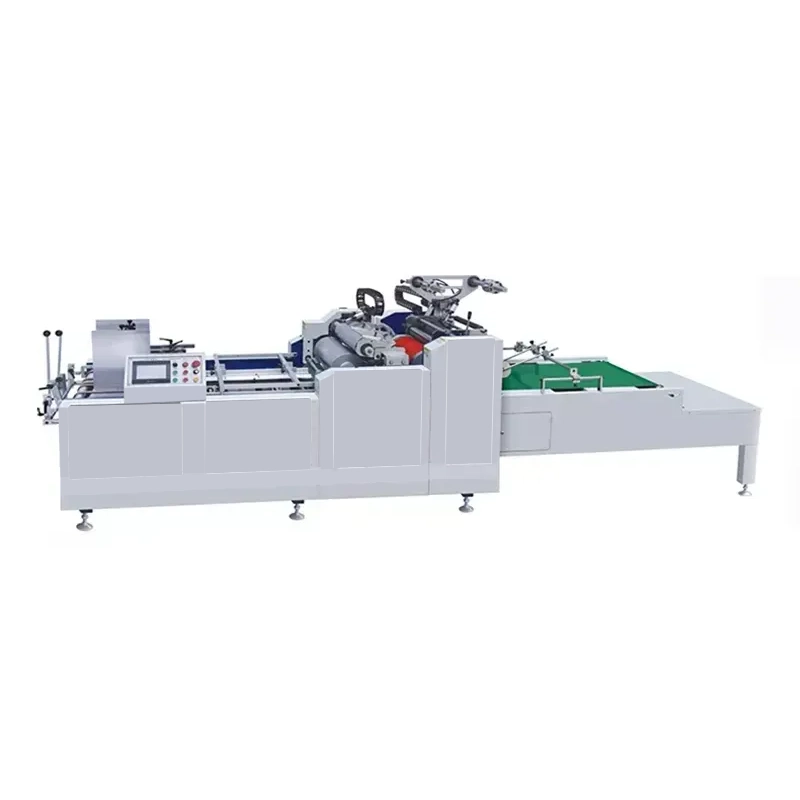
Breaking Down the Real Investment
The sticker price is only the starting point. To make a sound purchase, small factory owners must evaluate three cost layers:
| Cost Component | Estimated Range (USD) | Notes for Small Factories |
|---|---|---|
| Base Machine Price | $18,000 – $42,000 | Depends on max sheet size (e.g., 800×600mm vs. 1,000×700mm) and glue system (roller vs. spray). |
| Shipping & Customs | $1,200 – $3,500 | Sea freight plus local import duties (varies by country). |
| Installation & Calibration | $800 – $2,000 | Usually includes 1–2 days of on-site technician support. |
| Spare Parts Kit | $500 – $1,200 | Recommended for first-year maintenance (belts, nozzles, sensors). |
| Operator Training | $300 – $800 | 2–3 days for 2 operators; some suppliers bundle this free. |
| Estimated Total First-Year Cost | $20,800 – $49,500 | Excludes electricity and adhesive consumables. |
For small factories producing under 50,000 boxes per month, a used or refurbished Automatic Window Patching Machine can cost as low as $10,000–$15,000, but buyers should inspect the film cutting precision and conveyor wear carefully. Feihua’s new compact models (e.g., FH-WP600 series) are priced around $26,000–$32,000, offering a 2-year warranty on the main drive motor—a strong value proposition for risk-averse owners.
Key Factors That Drive Price Variation
Not all Automatic Window Patching Machine units are equal. The following specifications significantly affect final quotes:
-
Feeding Method: Friction-feed machines are cheaper ($18k–$25k) but less accurate for thin paper; suction-belt feeders add $6,000–$10,000 but reduce misalignment below 0.5mm.
-
Film Application: Hot-melt adhesive systems cost 15% more than cold-glue types, yet they enable faster curing in humid climates.
-
Control System: PLC with touchscreen (standard on Feihua models) adds $2,500–$4,000 compared to mechanical dial controls, but it stores up to 99 job recipes—critical for small factories running frequent short orders.
-
Max Sheet Thickness: Machines handling 400–600 gsm board are pricier than those limited to 300 gsm.
A small factory prioritizing versatility over sheer speed should expect to pay near the upper end ($38,000–$45,000) for a unit that handles both cardboard and corrugated substrates. Feihua’s FH-WP800, for instance, supports 350–600 gsm at 4,500 sheets/hour and retails around $41,500 with a full spare-parts kit—a competitive midpoint in the global market.
Automatic Window Patching Machine FAQ
Q1: Can a small factory with only 200 sq. ft. of space install an Automatic Window Patching Machine?
A1: Yes, but careful layout planning is essential. A standard compact Automatic Window Patching Machine requires a footprint of roughly 4.5m (length) × 1.8m (width) including operator access and material staging. For example, Feihua’s FH-WP600 measures 4.2m × 1.7m, which fits comfortably in 200 sq. ft. (≈18.6 m²) if you allocate an additional 1.5m clearance at the delivery end for stacking. However, you must also reserve space for a glue tank (if external) and a small compressor (3–5 HP). We recommend sketching a floor plan with a 1.2m service corridor on both sides—this increases actual requirement to ~250 sq. ft. for safe operation. If your space is tighter, consider a tabletop semi-automatic version (under 3m length) at a lower cost (~$15,000), though output will drop to 1,800–2,200 sheets/hour.
Q2: How long does it take for a small factory to recoup the investment in an Automatic Window Patching Machine?
A2: The payback period typically ranges from 10 to 18 months for small factories replacing manual window-pasting labor. Here is a realistic calculation: One manual operator pastes ~300–400 boxes per hour with a 5–8% rejection rate. A mid-speed Automatic Window Patching Machine (e.g., Feihua FH-WP700 at 4,000 sheets/hour) requires only one feeder and one stacker, reducing labor from 4 workers to 2 per shift. Assuming an average labor cost of $3.50/hour per worker (Southeast Asia) or $15/hour (Eastern Europe), and a shift of 8 hours, the monthly labor saving ranges from $700 to $2,400. Combined with a 3% reduction in material waste (film and board), the total monthly saving often reaches $1,800–$3,200. At a $30,000 machine price, break-even occurs in 10–16 months. Faster if you run two shifts. Feihua users frequently report payback under 14 months due to the machine’s low jam rate (<1.5%).
Q3: What are the most common hidden costs when buying an Automatic Window Patching Machine for a small factory?
A3: Beyond the purchase price, three hidden costs catch small factory owners off guard:
(1) Electrical upgrades – Many used buildings lack 3‑phase 380V outlets; rewiring and installing a stable voltage regulator can cost $600–$1,800.
(2) Film waste during setup – Each job change wastes 10–15 meters of PVC/PLA film until tension and temperature stabilize. Over a month with 20 job changes, that adds $80–$150 in consumables.
(3) Emergency spare parts shipping – If your supplier has no local warehouse, express delivery for a critical sensor or main board may cost $200–$500 plus 3–5 days of downtime. To mitigate this, Feihua offers a prepackaged “first-year survival kit” (included in the $31k–$35k package) with 2 sensors, 3 heating rods, and 5 spare belts, plus a 24‑hour online diagnostic service. Always ask for the total landed cost including these incidentals before signing.
Choosing the Right Supplier for Your Budget
Small factories benefit most from suppliers that offer modular upgrades. Feihua stands out by providing a “growth path”: you can start with a manual film-loading system and later add an automatic reel splicer ($4,200) without replacing the whole machine. This flexibility protects your initial investment. Additionally, Feihua’s machines come with CE and UL-certified electrical panels—a non-negotiable safety feature often missing in lower-priced Asian imports. When comparing quotes, request a video run-test with your own board samples; reputable sellers like Feihua provide this free of charge.
Final Verdict: Is It Worth the Cost?
For a small factory producing 30,000–60,000 windowed cartons monthly, a new Automatic Window Patching Machine in the $25,000–$38,000 range is a justifiable asset—provided you calculate total first-year expenses under $50,000. The machine reduces manual errors, speeds up order fulfillment, and opens doors to higher-margin clients who demand consistent film registration. While used machines tempt with lower upfront prices, the risk of unplanned downtime often outweighs the savings. Feihua’s balance of affordability, spare parts availability, and responsive technical support makes it a trustworthy partner for first-time buyers.
Ready to find the right Automatic Window Patching Machine for your floor plan and budget?
Contact Feihua today for a personalized cost sheet, free sample testing, and a live video demonstration. Our team will help you compare three models side-by-side, calculate your exact payback period, and advise on financing options. Your production upgrade starts with one conversation. Reach out now.