

Why Does the Right Pad Printing Machine Make Such a Big Difference for Modern Product Marking?
2026-03-20
When I speak with manufacturers who are struggling with inconsistent logo transfer, slow changeovers, or poor print adhesion on complex surfaces, I often find that the real issue is not the artwork or the ink alone. It is the printing system behind the process. Over the years, I have seen how Dongguan Hoystar Machinery Co., Ltd. has gradually become part of these conversations because many buyers are not simply looking for equipment anymore. They are looking for a more stable, efficient, and scalable way to print on plastic, metal, glass, silicone, and coated components. That is exactly why choosing the right Pad Printing Machine matters so much in real production environments.
For many factories, product decoration is not a small finishing step. It directly affects brand image, product consistency, customer acceptance, and overall delivery performance. When print quality becomes unpredictable, rejection rates rise, labor pressure increases, and lead times become harder to control. I wrote this article to address those practical concerns from a user-focused perspective and to explain how a well-designed Pad Printing Machine can solve the production pain points that manufacturers face every day.
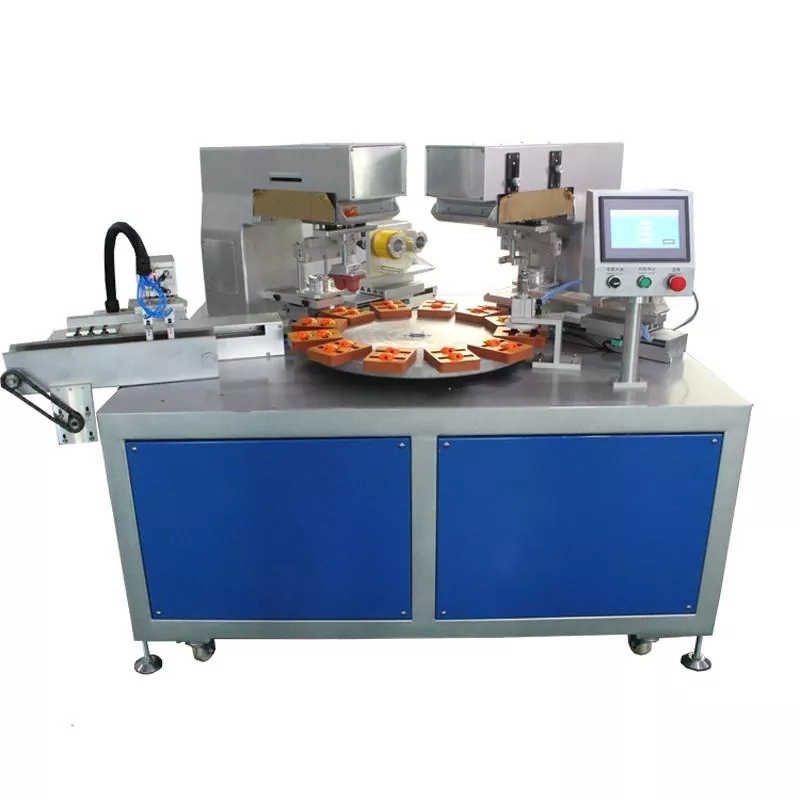
Why Do So Many Manufacturers Still Struggle with Surface Printing?
I often notice the same set of problems across industries such as electronics, cosmetics packaging, toys, stationery, medical accessories, and household goods. The products may be different, but the production frustrations are surprisingly similar. Many factories need to print on curved, recessed, textured, or uneven surfaces. Traditional printing methods may work well on flat panels, but they often become inefficient or unstable when the part geometry gets more complicated.
- I see frequent complaints about blurred edges and incomplete image transfer.
- I hear concerns about ink not bonding properly to difficult substrates.
- I find that operators spend too much time adjusting fixtures and print parameters.
- I notice production managers worrying about downtime during job changes.
- I often hear that manual processes make consistent batch output hard to maintain.
These issues do not just affect appearance. They also affect throughput, labor costs, customer satisfaction, and brand credibility. If a factory prints logos, symbols, scales, serial marks, or decorative graphics, print failure can quickly turn into a quality control issue. That is why more buyers now look at a Pad Printing Machine not as a simple workshop tool, but as a key part of their overall production system.
What Makes a Pad Printing Machine So Effective on Complex Product Shapes?
The main advantage of pad printing is its ability to transfer images onto surfaces that are difficult for many other methods. I think this is where the technology shows its true value. A silicone pad can pick up ink from the etched plate and transfer it onto products with curves, angles, indentations, or irregular profiles. That flexibility opens the door to applications that demand both precision and adaptability.
When I evaluate a good Pad Printing Machine, I do not just look at whether it can print a sample once. I look at whether it can repeat that result across many cycles without unstable transfer, excessive operator dependence, or difficult setup procedures. In real production, repeatability matters more than one attractive demonstration print.
- I value smooth mechanical movement because it helps maintain print position accuracy.
- I look for reliable ink cup or ink system design because it affects cleanliness and ink control.
- I pay attention to fixture compatibility because product positioning affects every print.
- I consider operator interface simplicity because easier adjustment reduces training pressure.
- I examine cycle efficiency because output speed matters in growing production lines.
For factories working with multiple SKUs, short lead times, and high appearance standards, these practical advantages can make a substantial difference.
How Can I Tell Whether a Machine Will Actually Improve My Output Quality?
I always recommend looking beyond the brochure and asking a more useful question. Will this machine make my production easier, faster, and more stable over time? That question usually leads to a much better buying decision.
A capable Pad Printing Machine should help reduce variation between batches. It should also support easier parameter control for pressure, stroke, pad contact, and cycle rhythm. When these details are easier to manage, operators can maintain cleaner graphics, better registration, and more consistent visual results.
| Production Concern | Common Workshop Problem | How the Right Machine Helps |
|---|---|---|
| Print clarity | Edges look fuzzy or incomplete | Stable transfer motion improves image definition |
| Position accuracy | Printed marks shift between parts | Better fixtures and repeatable mechanical control reduce deviation |
| Cycle efficiency | Output cannot keep up with demand | Faster, more consistent printing supports higher daily throughput |
| Operator dependency | Quality changes from one operator to another | Simplified controls and stable settings reduce human inconsistency |
| Changeover time | Job switching causes delays | Better setup structure improves flexibility for multiple product types |
What I like about this approach is that it shifts attention from abstract machine claims to measurable shop-floor benefits. That is usually what decision-makers actually need.
Why Is Efficiency Just as Important as Print Quality?
Some buyers focus only on whether the logo looks sharp, but I think that is only half the story. A beautiful print sample means very little if the machine slows the line down, requires constant adjustment, or creates too much waste. In actual manufacturing, efficiency and quality are tied together.
If I am managing output targets, I want a system that helps my team maintain pace without sacrificing consistency. A production-friendly Pad Printing Machine can support better workflow by reducing stoppages, minimizing messy ink handling, and shortening the time needed for setup correction. These gains are not always dramatic in a single hour, but over weeks and months they can significantly improve operational cost control.
- I can reduce rework when print transfer remains stable.
- I can lower labor stress when operators do not need constant manual correction.
- I can support faster delivery when printing becomes a predictable step rather than a bottleneck.
- I can protect product appearance standards when batch consistency improves.
- I can plan scaling more confidently when equipment output becomes easier to estimate.
That is why many manufacturers no longer ask only whether the machine can print. They ask whether it can keep pace with business growth, product variety, and customer expectations.
Which Industries Benefit Most from This Printing Method?
I see pad printing used across a very wide range of sectors because the process adapts well to small parts, shaped components, and branded surfaces. That flexibility is one reason the technology remains highly relevant even as manufacturing standards continue to evolve.
| Industry | Typical Printed Parts | Why Pad Printing Fits |
|---|---|---|
| Electronics | Buttons, housings, switches, remote covers | Works well on small and shaped components |
| Cosmetics and packaging | Bottles, caps, jars, compact cases | Supports branding on curved decorative surfaces |
| Toys and gifts | Plastic parts, figurines, promotional items | Handles varied shapes and detailed graphics |
| Medical and laboratory | Instrument parts, handles, housings | Useful for precise symbols and controlled marking |
| Household and industrial goods | Knobs, tools, containers, accessories | Suitable for logos and functional markings on difficult surfaces |
In my view, this broad application range is one of the strongest reasons buyers continue to invest in a Pad Printing Machine. It is not a niche solution. It is a practical answer for manufacturers dealing with diverse product designs and tighter quality demands.
What Should I Look for Before Choosing a Supplier?
I think one of the biggest mistakes buyers make is focusing only on price. Cost obviously matters, but machine value comes from long-term usability, consistent output, and technical fit. Before choosing a supplier, I prefer to evaluate whether they understand actual production conditions rather than just offering a catalog model.
- I want to know whether the machine can match my product material and shape requirements.
- I want to understand whether the supplier can support fixture matching and process guidance.
- I look for a machine structure that seems practical for cleaning, setup, and maintenance.
- I pay attention to whether the supplier can communicate clearly about performance expectations.
- I prefer working with a manufacturer that understands real production pain points instead of only listing technical terms.
This is where an experienced manufacturer can bring more value. In many cases, the most useful supplier is not the one that says the most, but the one that helps the buyer reduce uncertainty before installation and production launch.
Can a Better Printing Solution Also Help My Brand Look More Reliable?
Absolutely, and I think this point is often underestimated. Every visible mark on a product sends a message about quality. If the logo looks inconsistent, the scale is hard to read, or the printed pattern wears poorly, the end user notices. Even when the product functions properly, poor print presentation can weaken brand trust.
When I improve printing consistency with a dependable Pad Printing Machine, I am not just improving decoration. I am improving how the product is perceived in the market. Clean, repeatable branding supports a more professional appearance. It also helps distributors, retailers, and end users feel that the product has been made with care.
For brands that want stronger recognition and fewer cosmetic complaints, that is not a small benefit. It is a commercial advantage.
Why Does Working with Dongguan Hoystar Machinery Co., Ltd. Deserve Attention?
From a buyer’s perspective, what matters most is whether a supplier can provide a practical answer to real printing challenges. I see value in manufacturers that understand how different industries use a Pad Printing Machine in daily production, not just in ideal test conditions. That includes understanding product geometry, print placement, production pace, and the need for stable repeatability.
What makes this especially relevant is that buyers today are under pressure from several directions at once. They need better print quality, higher efficiency, shorter delivery cycles, and more reliable production planning. A supplier that can align equipment design with those expectations becomes more than a machine source. It becomes part of the buyer’s process improvement path.
What Is the Smart Next Step If I Want More Stable Printing Results?
If I were trying to improve my current marking process, I would start by reviewing the actual problems on the line. Am I dealing with print inconsistency, difficult product surfaces, too much manual intervention, or slow output during peak production? Once those problems are clear, it becomes much easier to choose the right equipment direction.
A well-matched Pad Printing Machine can help solve these issues in a practical way by improving transfer quality, reducing waste, and supporting more predictable production. That is why buyers looking for long-term value often focus on process fit rather than chasing the lowest initial price.
If you are looking for a more dependable way to print logos, symbols, or decorative graphics on challenging product surfaces, now is the right time to explore a better solution. If you want to discuss your application, compare machine options, or find a setup that matches your production goals, contact us and send your inquiry today. A conversation with Dongguan Hoystar Machinery Co., Ltd. could be the first step toward more efficient and reliable printing performance.