

Why Is a Large Format Vacuum Flat Screen Printing Machine Better Than Roll-to-Roll for High-Density Graphic Applications
2026-06-25
For production managers and shop owners handling high-density graphic jobs—think thick deposits of ink, tactile textures, or opaque whites on dark substrates—the equipment choice directly impacts quality, waste, and throughput. While roll-to-roll (R2R) printing dominates flexible media, the Large Format Vacuum Flat Screen Printing Machine from HOYSTAR offers distinct engineering advantages that R2R simply cannot match when density and precision are non‑negotiable.
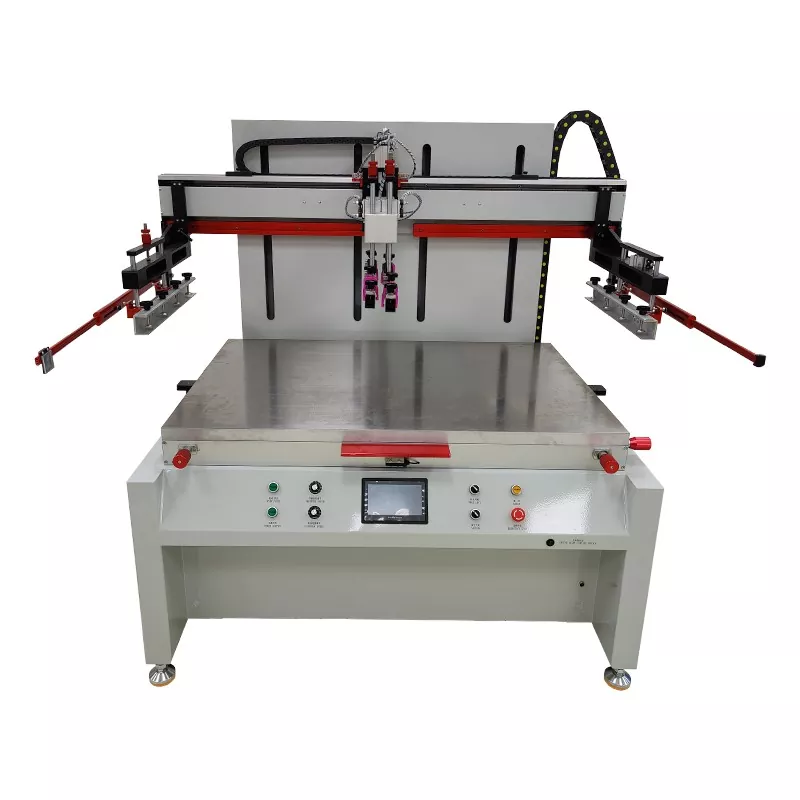
The Core Difference: Substrate Control Under Vacuum
Roll‑to‑roll systems rely on web tension and driven rollers to maintain substrate position. This works for thin films, but high‑density graphics often require thicker stock (e.g., 2–5 mm rigid sheets, corrugated plastics, or heavy textiles). Tension distorts these materials, causing registration drift.
A Large Format Vacuum Flat Screen Printing Machine uses a flat steel or aluminum bed with thousands of precision‑drilled vacuum holes. The substrate is held absolutely flat by negative pressure—eliminating warpage, cockling, or edge curl. This vacuum‑locked stability ensures that each screen stroke deposits ink uniformly, even at 80–120 mesh counts with heavy stencil emulsions.
Head‑to‑Head: R2R vs. Large Format Vacuum Flat Screen Printing Machine
| Parameter | Roll‑to‑Roll | Large Format Vacuum Flat Screen Printing Machine (HOYSTAR) |
|---|---|---|
| Substrate thickness range | ≤ 0.5 mm (film, foil) | 0.5 – 50 mm (rigid, semi‑rigid, thick textiles) |
| Ink deposit per pass | 10–25 µm (limited by drying and tension) | 40–120 µm (thick stencil + off‑contact control) |
| Registration accuracy | ±0.3–0.5 mm (cumulative over length) | ±0.1 mm (static vacuum hold‑down) |
| Waste on setup | 5–10 m of web per job | < 1 sheet per job (instant visual alignment) |
| Drying compatibility | In‑line hot air only (slower for heavy layers) | Allows off‑line or intermediate IR/UV with staged passes |
| Best‑suited graphics | Continuous patterns, banners, decals | High‑density logos, braille, tactile warnings, opaque whites |
Why Density Demands Flatbed Vacuum
High‑density printing requires more ink volume. R2R’s dynamic tension causes the substrate to elongate under the squeegee pressure—then snap back after the stroke. This “bounce” pulls ink laterally, reducing edge acuity and density uniformity. With a Large Format Vacuum Flat Screen Printing Machine, the vacuum holds the substrate rigidly against the bed, so all squeegee force translates into vertical ink penetration, not horizontal movement. The result: sharper edges, higher opacity, and repeatable thickness across the entire print area.
HOYSTAR further enhances this by offering adjustable vacuum zones, so operators can target hold‑down strength precisely for different panel sizes—saving energy while maintaining grip.
Operational Efficiency That Saves Costs
R2R setups demand long warm‑up times for tension calibration and web tracking. Job changeovers require re‑threading the entire web path—often 20–30 minutes. A Large Format Vacuum Flat Screen Printing Machine uses a straightforward sheet‑fed workflow: load, align, print, unload. HOYSTAR machines integrate quick‑release screen clamps and micro‑registration tables, reducing make‑ready to under 5 minutes for repeat jobs. For short‑run high‑density work (50–500 sheets), this flatbed approach cuts labor costs by 40–60% compared to R2R.
HOYSTAR Large Format Vacuum Flat Screen Printing Machine – FAQ
Q1: Can a Large Format Vacuum Flat Screen Printing Machine handle extremely heavy ink deposits (e.g., 150 µm) without smearing or pinholing?
A1: Yes, provided the machine offers independent off‑contact adjustment and a robust vacuum system with minimum 15–20 kPa suction. HOYSTAR models include a dual‑stage vacuum pump and a precision flood‑coater mechanism that pre‑fills the mesh evenly. For 150 µm deposits, we recommend using a thick stencil (200–250 µm emulsion) and a slow‑squeegee speed (2–4 cm/s). The static flatbed eliminates substrate vibration, which is the primary cause of pinholes in high‑volume passes. Additionally, the vacuum can be staged—lower suction during flood stroke, full suction during print stroke—to prevent ink being pulled through the mesh prematurely.
Q2: Does the vacuum system increase electricity consumption significantly compared to R2R?
A2: No, and in many cases, it is more efficient. R2R uses multiple driven motors (tension, nip, rewind, unwind) that run continuously during production—often totaling 3–5 kW per hour. A Large Format Vacuum Flat Screen Printing Machine typically consumes 1.2–1.8 kW for the vacuum pump, and this runs only during the print stroke and load/unload phases. HOYSTAR equips its units with variable‑frequency drive (VFD) pumps that automatically reduce RPM when the bed is fully sealed, cutting idle consumption by up to 40%. Over an 8‑hour shift with 50% active printing time, the flatbed vacuum uses less total energy than an idling R2R line.
Q3: What maintenance intervals are critical for the vacuum bed to maintain consistent hold‑down?
A3: Three key maintenance tasks must be observed: (1) Daily – wipe the bed surface with a lint‑free cloth and isopropyl alcohol to remove ink mist and dust that can block vacuum holes. (2) Weekly – inspect the foam gaskets around the bed perimeter; replace if compressed or cracked, as leaks reduce suction by 30–50%. (3) Monthly – remove the bed plate and clean the vacuum plenum chamber using a vacuum cleaner with a HEPA filter (do not use compressed air, which pushes debris deeper). HOYSTAR machines feature a quick‑release bed design and tool‑less gasket replacement, reducing this monthly task to under 20 minutes. Skipping these steps leads to uneven grip, causing micro‑movements that destroy high‑density edge quality—so we recommend logging each cleaning cycle in your preventive maintenance schedule.
The Verdict: Flatbed Wins for Density
When your profit margin depends on vivid, durable, high‑opacity graphics—whether for automotive overlays, appliance nameplates, or architectural signage—the Large Format Vacuum Flat Screen Printing Machine is objectively superior to roll‑to‑roll. R2R remains a workhorse for long‑run flexible films, but it compromises on density, registration, and substrate flexibility. HOYSTAR machines are engineered specifically for job shops that demand both quality and agility.
Ready to Compare Real Production Data?
Every shop’s mix is unique. HOYSTAR offers on‑site sample printing and cycle‑time simulations using your actual artwork and substrates. Our technical team provides a side‑by‑side ROI analysis against your current R2R or flatbed setup—no obligation, no guesswork.
Contact us today to schedule a live demonstration or request a customized quote. Let us show you how a Large Format Vacuum Flat Screen Printing Machine can transform your high‑density graphic production from frustrating to flawless. Reach out via our website or call your regional HOYSTAR representative—we respond within 4 business hours.