

Why Is PET Plastic Film Becoming the Preferred Choice for Modern Packaging and Industrial Applications?
2026-03-09
In recent years, I have noticed a clear shift in the materials many manufacturers rely on for packaging, insulation, and industrial protection. During this transition, Future Colors (Shandong) Material Technology Co., Ltd. gradually introduced advanced production processes and high-performance material solutions that focus on one versatile product category—PET Plastic Film. As companies face increasing pressure to balance durability, cost efficiency, and sustainability, this material is gaining widespread attention across industries.
Many purchasing managers I speak with often struggle with common questions: Which film material offers the best balance between strength and flexibility? Which option performs well in high-temperature environments without significantly increasing costs? These concerns explain why PET Plastic Film is becoming a practical solution for businesses seeking reliability and scalability.
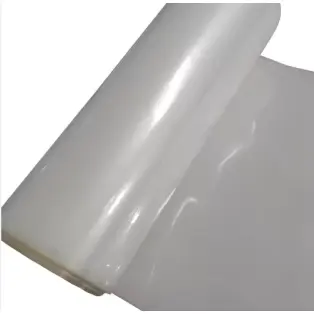
Why Do Manufacturers Prefer PET Plastic Film Over Traditional Plastic Films?
When I evaluate material options for industrial clients, performance consistency is always the first consideration. Traditional plastic films often struggle with dimensional stability, heat resistance, and long-term durability. In contrast, PET Plastic Film delivers a well-balanced set of mechanical and thermal properties that help manufacturers reduce product failures and improve overall product quality.
- Excellent tensile strength that maintains structural integrity under pressure
- High transparency suitable for packaging and display products
- Strong resistance to moisture and chemicals
- Stable performance across a wide temperature range
- Reliable insulation performance for electrical and electronic components
Because of these advantages, PET Plastic Film is widely used in flexible packaging, printing, electronics insulation, lamination, and industrial protective layers.
What Problems Can PET Plastic Film Solve for Packaging and Manufacturing Companies?
In many production environments, film materials must do more than simply cover or protect a product. I often hear concerns from packaging teams about wrinkling, tearing, and inconsistent thickness during high-speed processing. These issues can slow down production lines and increase waste.
One reason manufacturers choose PET Plastic Film is its excellent dimensional stability. Even under heat and mechanical stress, the film maintains its shape and structural integrity. This stability helps ensure smoother printing, lamination, and sealing processes.
For companies focused on long-term product reliability, the durability of PET Plastic Film also reduces the risk of product damage during storage and transportation.
How Does PET Plastic Film Compare With Other Common Film Materials?
Selecting the right film material requires understanding the practical differences between available options. The table below outlines how PET Plastic Film performs compared with several commonly used materials.
| Material Type | Strength | Heat Resistance | Transparency | Typical Applications |
| PET Plastic Film | High | Excellent | High | Flexible packaging, electrical insulation, printing |
| PP Film | Medium | Moderate | High | Food packaging, consumer products |
| PVC Film | Medium | Moderate | Medium | Construction materials, shrink packaging |
| PE Film | Low to Medium | Low | Medium | Basic packaging, protective coverings |
From my experience working with industrial buyers, this comparison clearly explains why PET Plastic Film is often selected when performance reliability matters most.
Where Can PET Plastic Film Be Applied Across Different Industries?
Another reason many companies adopt PET Plastic Film is its flexibility across multiple applications. Instead of sourcing different materials for different production stages, manufacturers can often rely on a single high-performance film solution.
Common applications include:
- Food and consumer goods packaging
- Flexible printed packaging materials
- Electrical insulation layers
- Solar panel backsheet materials
- Industrial laminating films
- Protective films for electronics and displays
Because PET Plastic Film offers both strength and clarity, it performs well in applications where both protection and visual presentation are important.
Why Do Global Buyers Pay Attention to Material Quality and Production Consistency?
For international buyers, material consistency is often more important than price alone. Production delays caused by inconsistent film thickness or surface defects can create serious supply chain problems.
This is why manufacturers increasingly work with specialized material producers capable of maintaining strict production control. Companies such as Future Colors (Shandong) Material Technology Co., Ltd. invest in advanced extrusion equipment and quality inspection systems to ensure every batch of PET Plastic Film meets industrial performance standards.
Stable production processes help ensure uniform thickness, reliable mechanical strength, and consistent surface quality, all of which are essential for downstream processing.
How Can the Right PET Plastic Film Supplier Improve Your Product Performance?
When I advise companies on selecting suppliers, I emphasize that the film itself is only part of the solution. Technical expertise, production experience, and customization capabilities are equally important.
A reliable supplier can help optimize film thickness, surface treatment, and mechanical properties according to specific application requirements. With the right support, PET Plastic Film can significantly improve product durability, processing efficiency, and overall manufacturing reliability.
If you are currently searching for a stable material solution for packaging, electronics, printing, or industrial applications, it may be the right time to explore the advantages of PET Plastic Film.
If you would like to learn more about available specifications, customization options, or bulk supply capabilities, we welcome you to contact us for detailed information. Our team is always ready to discuss your project requirements and help you find the most suitable material solution for your business.